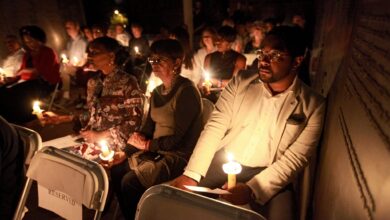
Mount Vernon Women’s Leadership Summit Launches 250th Anniversary Programming
Leading historians and journalists discussed leadership, democracy, and the enduring lessons of history

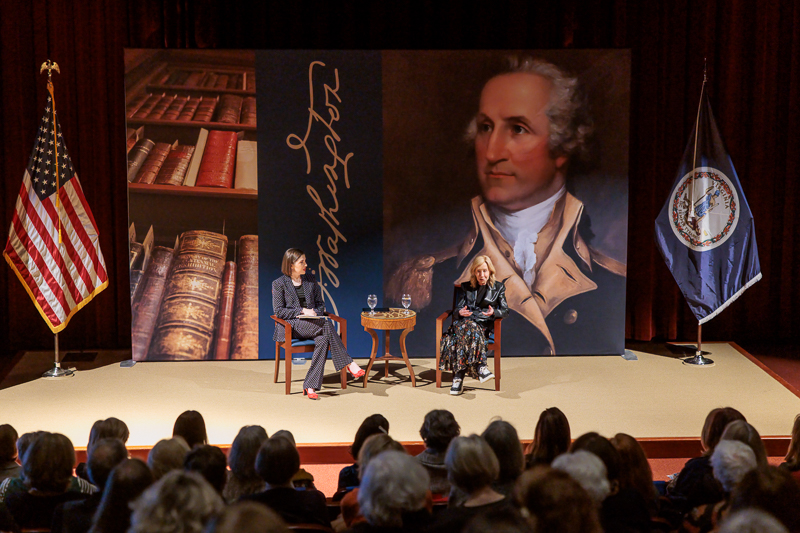
Alexandria, VA — George Washington’s Mount Vernon marked the beginning of its 250th-anniversary programming and celebrated Women’s History Month with the inaugural Women’s Leadership Summit, a three-day gathering that brought together leading historians, journalists, and policymakers to discuss leadership, democracy, and the enduring lessons of history.
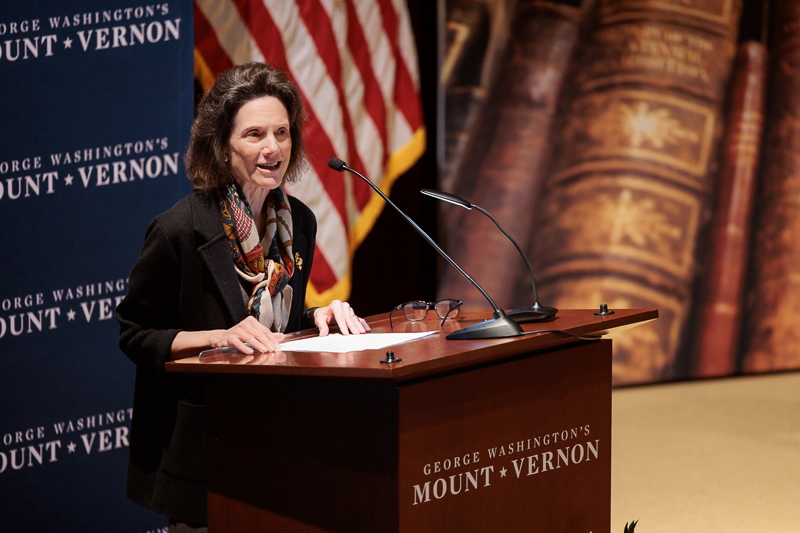
Held March 4–6 at the historic estate overlooking the Potomac River, the summit featured an impressive lineup of speakers, including award-winning historians Doris Kearns Goodwin, Annette Gordon-Reed, and Anne Applebaum. They were joined by veteran journalists Ann Compton and Judy Woodruff, along with Capitol Hill reporter Ali Vitali. The event drew policymakers, scholars, and emerging leaders from the fields of preservation, heritage, and business for conversations on civic engagement and the role of history in shaping the future.
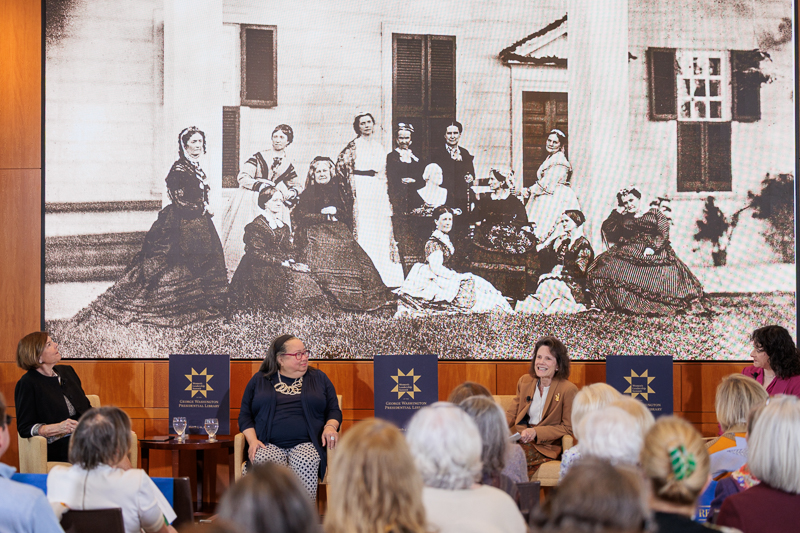
The summit was organized by Dr. Lindsay Chervinsky, executive director of the George Washington Presidential Library. A presidential historian and author known for her work on the Founding era, Chervinsky moderated several discussions and emphasized the library’s goal of encouraging thoughtful dialogue about the nation’s past and present while promoting civil discourse nationwide.

One of the most anticipated speakers was Doris Kearns Goodwin, the presidential historian and Pulitzer Prize–winning author known for works including “Team of Rivals.” Speaking to a packed audience, Goodwin reflected on the power of storytelling in helping people connect with history.
“Everybody should love history because they should love stories,” Goodwin said, explaining that narratives with a clear beginning, middle, and end help audiences understand complex historical events.
Goodwin traced her fascination with storytelling back to childhood memories with her father. As a young girl, she learned to keep score during Brooklyn Dodgers baseball games so she could recount them in detail to him when he returned home from work. The exercise, she said, taught her the importance of pacing and suspense.
“At first I would blurt out, ‘the Dodgers won’ or ‘the Dodgers lost,’” she said. “But that took all the drama away. I learned you have to tell the story from beginning to middle to end.”
She also credited her mother with nurturing her love of books. Despite suffering from heart disease caused by childhood rheumatic fever, her mother read constantly and encouraged Goodwin to borrow books from the library. Their nightly conversations about those books became formative experiences that helped shape her path toward becoming a historian.
Goodwin later reflected on her early career and her time as a White House Fellow during Lyndon B. Johnson’s presidency. While still a graduate student, she had written critically about the Vietnam War and worried her views might jeopardize her selection for the prestigious fellowship. Instead, Johnson invited her to work with him.
“He said, ‘Bring her down here for a year, and if I can’t win her over, nobody can,’” Goodwin recalled.
That experience eventually led to her assisting Johnson with his memoirs after he left office. Listening to the former president reflect on civil rights legislation and his legacy gave Goodwin what she described as a rare opportunity to understand presidential leadership from a personal perspective.
“That experience taught me to understand presidents from the inside out rather than judge them from the outside in,” she said.
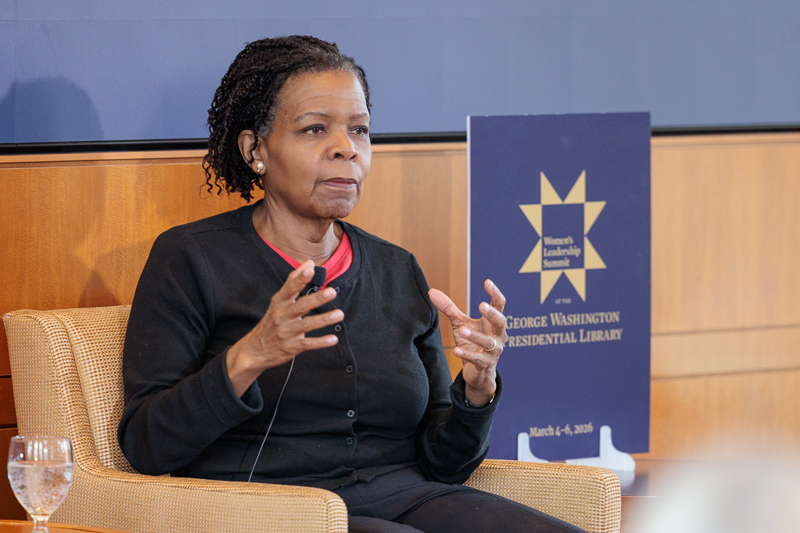
National Book Award-winning historian Annette Gordon-Reed also participated in the summit’s discussions. Gordon-Reed is widely recognized for reshaping scholarship on Thomas Jefferson and the enslaved Hemings family through her groundbreaking book “The Hemingses of Monticello: An American Family,” which won the National Book Award and the Pulitzer Prize for History. Her research brought new attention to the lives and experiences of the Hemings family and examined their complex relationship with Jefferson, helping broaden public understanding of the human dimensions of early American history.
The first of three panels focused on preservation. Anne “Dede” Neal Petri of the Mount Vernon Ladies’ Association described how the estate was saved in the 1850s through one of the earliest grassroots preservation efforts in American history.
At the time, the Washington family could no longer maintain the property, and both the federal government and the Commonwealth of Virginia declined to take responsibility for the deteriorating estate. Women across the country organized to raise funds to purchase and preserve the home of the nation’s first president.
According to Petri, the campaign gained momentum after Louisa Bird Cunningham wrote about the neglected condition of Washington’s home and appealed directly to the American public for support.
“It was essentially the first successful grassroots campaign in America,” Petri said.
The effort was remarkable for its time. Women could not vote and, in many cases, could not legally hold property in their own names. Nevertheless, they formed a voluntary association dedicated to preserving the estate. The Mount Vernon Ladies’ Association continues that mission today, working to ensure the property reflects the home George Washington knew and loved.

Pulitzer Prize–winning historian and journalist Anne Applebaum also addressed the summit, speaking about the fragility of democratic institutions and the role of journalism in documenting political change. Known for works such as “Gulag: A History, Red Famine,” and “Twilight of Democracy,” Applebaum discussed how modern authoritarian governments are increasingly cooperating and sharing strategies that challenge democratic systems.
She also reflected on her early career reporting from Eastern Europe during the collapse of communist governments. Applebaum recalled traveling to Berlin during the opening of the Berlin Wall in 1989, when crowds gathered at border crossings and events unfolded amid uncertainty and confusion.
“History can appear inevitable when we look back,” she said. “But at the time, many different outcomes are possible.”
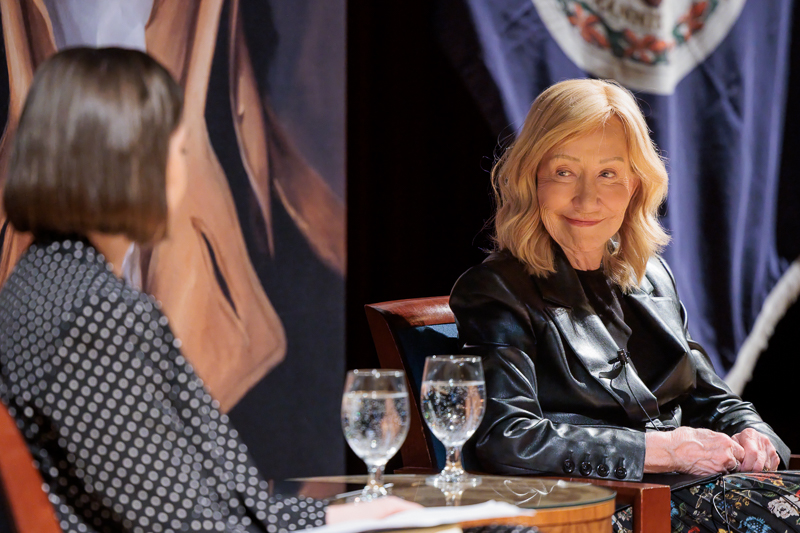
The summit concluded with a conversation between Judy Woodruff and Chervinsky focusing on journalism, public trust, and civic responsibility. Woodruff, whose career in political reporting spans more than five decades, shared reflections on her path from a military childhood to becoming one of the most respected figures in American broadcast journalism.
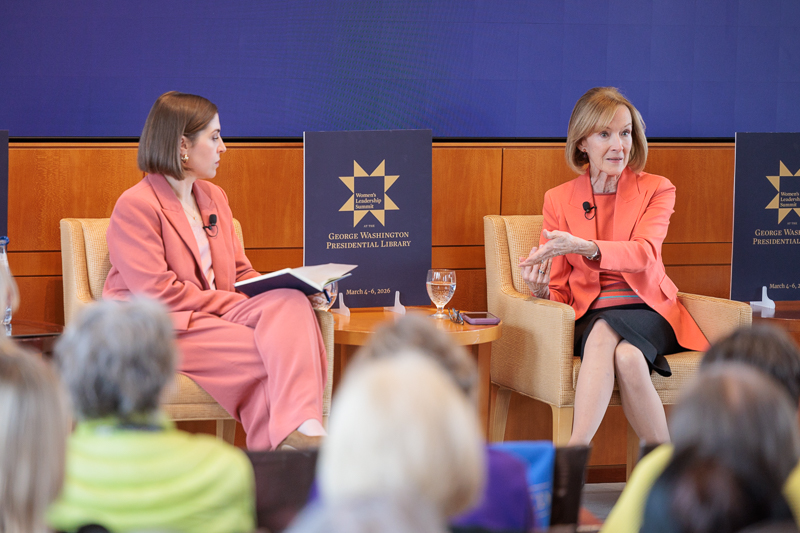
Born in Tulsa, Oklahoma, Woodruff said her parents emphasized the importance of education even though neither had completed high school. After attending Meredith College in North Carolina, she entered journalism almost by accident when she applied for a secretarial job at an ABC affiliate in Atlanta. Observing reporters in the newsroom quickly sparked her interest in the profession.
“From the minute I arrived there, I watched the camera crews and the reporters, and I fell in love with journalism,” she said.
Woodruff later covered major national events, including the 1981 assassination attempt on President Ronald Reagan and the September 11 attacks. Reflecting on the modern media landscape, she noted that the rise of 24-hour news cycles and social media has made accurate reporting both more difficult and more important.
“We are in a different world,” Woodruff said. “The job of the press is much more challenging, and the job of the American people to follow it all and understand it in depth is tougher.”
As the summit concluded, organizers described the event as the beginning of an ongoing effort to highlight women’s leadership while commemorating the nation’s approaching 250th anniversary.
“We are making history here,” one Mount Vernon Ladies’ Association leader said, reflecting on the significance of the inaugural gathering.