
Alexandria Marks Restoration of Freedom House, Once Center of the Slave Trade
Ceremony celebrates completion of exterior restoration at one of the city’s most significant historic landmarks


ALEXANDRIA, VA – Mayor Aliya Gaskins led a ribbon-cutting ceremony today at the Freedom House Museum—once the headquarters of the Franklin & Armfield slave-trading operation, one of the largest in the United States before the Civil War—joined by city officials and dignitaries to celebrate the completion of the building’s exterior restoration.
The event marked the third phase of a multi-year rehabilitation that began in March 2020, when the City of Alexandria acquired the property at the height of the pandemic. This latest phase focused on preserving the structure and ensuring the museum continues to tell, with accuracy and reverence, the story of the thousands of enslaved men, women, and children trafficked through this site to the Deep South.

A Landmark with a Painful Past
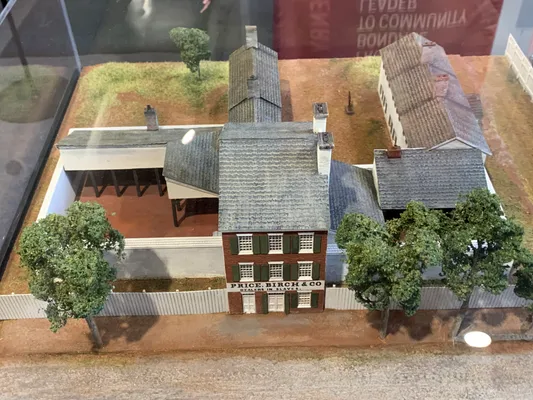
Located at 1315 Duke Street, the three-story brick townhouse is now operated by the Office of Historic Alexandria (OHA), which led the meticulous effort to stabilize, restore, and reinterpret the building in collaboration with the Division of African American History. The Freedom House Museum stands as a vital reminder of Alexandria’s role in the domestic slave trade and the human lives forever impacted by it.
“This work is about more than bricks and mortar,” said Gretchen Bulova, Director of the Office of Historic Alexandria. “It’s about ensuring that this space can continue to bear witness to the history of the domestic slave trade and to the strength of the people whose lives were forever changed here.”
Audrey Davis, Director of the city’s Division of African American History, added: “Freedom House matters. It is a site for everyone. It reflects what we were as a nation, what we fought against as a nation, and the more perfect union we strive to be—all are welcome at Freedom House.”

Exterior Restoration Completed Ahead of Schedule
The exterior rehabilitation, which began in 2024, was completed ahead of schedule. The project focused on repairing masonry, restoring the slate roof, and returning the building’s façade to its 19th-century appearance. Preservation experts utilized historic photographs, material studies, and architectural research to guide their work.

The restoration included reinstalling historically accurate windows, reopening a second doorway that initially faced Duke Street—where today’s ribbon cutting took place—and replacing a later-added gambrel roof with a period-appropriate gable roof.
Guided by Research and Expert Hands
Project guidance was derived from a Historic Structures Report prepared by preservation consultants. Oak Grove Restoration Company, led by Hank and Ann Handler, conducted the work under the architectural direction of Al Cox, the City’s preservation architect emeritus. The report served as a roadmap for the building’s stabilization and long-term use, ensuring that every decision—from paint color to roofline—was based on thorough research and analysis.
The Freedom House project has been shaped by community input and a shared commitment to striking a balance between preservation and interpretation. City officials emphasized that restoring the building’s original appearance is not an attempt to glorify the past but rather a way to confront it honestly and respectfully.
Next Steps: Accessibility and Interpretation
Inside, the next phase—Phase Four—will involve accessibility improvements and redesigned exhibit spaces that will further enhance the museum’s educational mission. Plans call for new galleries and interactive displays to help visitors understand the personal stories of those who were bought, sold, and held within its walls.
“Now we are turning our attention to fundraising for the interior work,” said Bulova, “which will include making the site more ADA accessible and a new exhibit throughout the entire building dedicated to telling the story and impacts of the domestic slave trade that originated at this site in 1828.”
When Phase Four of the project is completed, the Freedom House Museum will reopen with updated exhibits and expanded opportunities for public engagement, contributing to Alexandria’s ongoing efforts to present a more comprehensive narrative of its history.


A Commitment to Remembering
In her remarks, Mayor Gaskins delivered a powerful message about the importance of preserving history at a time when others seek to erase it. “While some may try to ban books and erase history,” she said, “this will not happen here in Alexandria. When we think about Freedom House, this museum serves as a deliberate declaration that we will not forget our history. We are committed to intentionally sharing the stories of our past.”
Continuing Alexandria’s Legacy of Preservation
The restoration of the Freedom House Museum reflects Alexandria’s broader mission to preserve its historic sites while telling a more inclusive and truthful story of the city’s past. From Juneteenth celebrations to the preservation of African American burial grounds, Alexandria continues to weave remembrance, education, and equity into its understanding of history. Freedom House now stands not only as a monument to those who suffered under slavery, but also as a symbol of a community’s determination to confront its past—and to build a future grounded in truth, justice, and shared humanity.
Exterior Rehabilitation by Oak Grove Restoration Company, Al Cox, FAIA emeritus. Funding for the Freedom House Rehabilitation project was supported in part by the Commonwealth of Virginia; a Save America’s Treasure grant from the Historic Preservation Fund administered by the National Park Service, Department of the Interior; and individual donations from advocates dedicated to preserving Alexandria’s history. To learn more about how to support the interior rehabilitation of this important site and planned exhibition, please visit Alexandriava.gov/Historic



[…] RELATED: Alexandria Marks Restoration of Freedom House, Once Center of the Slave Trade […]