When a City Has Its Own Flood Newsletter, That Says Something
Issue 27 of Flood Action Alexandria details millions in drainage projects, utility relocations, and long-term flood resilience work across the city.

ALEXANDRIA, VA — The latest Flood Action Alexandria newsletter — now on Issue 27 — landed in our inbox this week.
Twenty-seven issues in, that tells you flooding in Alexandria isn’t an occasional happening — it’s institutional, and something the city is actively managing long-term. Flooding here isn’t new. But the scale of coordination, planning, and infrastructure investment does continue to grow.
In the opening Manager Message, Jesse Maines, Chief of the City’s Stormwater Management Division, said, “With the year in full swing, it’s time to turn our attention to the work before us over the next several months.”
FUN STORY FROM THE ARCHIVES: Local Couple Canoes 100 Block of King Street in Old Town Alexandria During Flood
Staff will continue delivering large-capacity and neighborhood spot improvement projects, performing maintenance on the storm sewer system, and advancing the City’s Flood Resilience Plan. “By working together with the community, we can make the City more resilient,” Maines added.
Flood Action Alexandria launched in 2021 as a coordinated initiative to mitigate flooding through capital projects, maintenance programs, and long-term resilience planning. Nearly 20 percent of the city lies within mapped floodplains, and heavier rainfall events in recent years have placed added strain on aging infrastructure.

Major Projects Moving Forward
Among the Large Capacity projects:
• The Commonwealth, Ashby & Glebe Flood Mitigation Project will install new storm sewer culverts along Commonwealth Avenue, E. Glebe Road, and Montrose Avenue, add new inlets at multiple low points, and construct a new outfall to Four Mile Run. Utility relocations are expected next year.
Neighborhood Spot Improvement projects include:
• 100 W. Reed Avenue Curb Inlet Improvements, adding new storm sewer lines and larger pipes near Four Mile Run.
• Edison Street Cul-de-Sac Drainage Improvements, a $1 million investment to expand storm sewer capacity, with construction anticipated in early 2027.
• The $5 million Hume Avenue Bypass Project, installing new storm sewer infrastructure along Hume Avenue and E. Raymond Avenue, along with necessary fiber, gas, and water relocations.
• Mount Vernon Cul-de-Sac Improvements, an approximately $2 million drainage upgrade following revised designs developed after community feedback.

• Mount Vernon Dual Culvert Replacement, a $2.5 million effort to rehabilitate and replace aging metal culverts between Mt. Vernon Avenue and Edison Street.
• Valley Drive Storm Drain Improvements, installing new pipes, inlets, and manholes along Crestwood, Summit, and Dogwood to increase capacity and reduce localized flooding.
• Clifford, Fulton & Manning Storm Sewer Improvements, now nearing final design, with additional subsurface analysis underway to reduce construction risk.
The Utility Relocation Challenge
Even when projects are fully designed, construction cannot begin until underground utilities are moved — a significant challenge in a dense, historic city layered with decades of infrastructure.
John Hill, Chair of the Stormwater Utility and Flood Mitigation Advisory Committee, addressed that reality in the newsletter.
“The Flood Action Program is making Alexandria more flood resilient. But…no one said this was going to be easy,” Hill wrote.
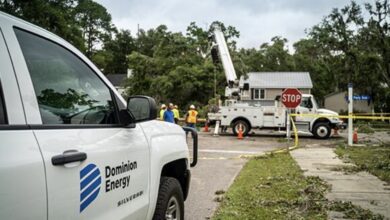
Many of the projects now ready for construction require relocation of buried electric lines, gas mains, water pipes, sanitary sewer lines, and fiber infrastructure — work that only utility companies themselves can perform.
For most of the eleven projects currently in advanced design, construction is expected to begin in late 2026 or early 2027.
Grant Funding and Next Steps
The City is applying for additional funding through the Virginia Community Flood Preparedness Fund to support Phase 2 of the Four Mile Run and Hooffs Run Inlet Replacement Project and the Valley Drive Storm Drain Improvement Project.
Since 2020, Alexandria has received more than $6.4 million in state flood mitigation grants supporting six projects, including the Flood Resilience Plan and major drainage improvements.
One high-profile proposal — a stormwater pump station at Waterfront Park — recently encountered a setback when the National Park Service declined to approve a required deed modification. City officials have said alternative solutions are under evaluation.
Flooding in Alexandria may not be solved overnight. But when a city has its own flood newsletter — and is now on Issue 27 — it’s clear stormwater management is no longer reactive. It’s ongoing.
Residents can sign up for updates at alexandriava.gov/FloodAction.