
Back-to-School Tips for Parents of Preschool & Kindergarten Kids
Bridge the Gap Between Home & School


Alexandria, VA – Many families in Alexandria are busy preparing their young children to enter kindergarten or to start preschool after the summer break. For little kids, home and school can seem like two completely different worlds with new rules to follow. Fortunately, parents and caregivers can take steps to ease the transition from laid-back summer schedules to the changes that come when school bells ring.
Rebecca Fetters, Director of Family Services at Kids’ First Years partner The Child & Family Network Centers (cfnc-online.org), offers some tips to bridge the gap between home and school for a smooth back-to-school experience. “All of these tips are designed to build relationships and help the child make connections that are important for early learning.”
Before School Starts
- If your child likes to draw/color/paint, hang up their work and let them know that you’ll look forward to displaying the things that they create in school.
- When it’s convenient, drop by the elementary school or preschool that your child will attend so they can see the building, visit the playground, and become more familiar with the school environment.
- Talk to other parents who have children going to the same school and might be in your child’s classroom. If possible, arrange a play date so your child can make new friends before school starts.
- Try to implement some structure so the school schedule won’t seem suddenly disruptive. For example, sit at the table for breakfast with your child and talk about eating and cleaning up at school during lunch or snacks. Also, describe how the teacher will move from one activity to the next throughout the school day; when possible, practice doing that at home.
- Read books to your child about going to school and talk about the stories and the characters. Some recommendations from Rebecca Fetters include: Chrysanthemum, Froggy Goes to School, The Kissing Hand, and On the First Day of Preschool. “Children will see these books in their classroom and will make the connection about enjoying them at home,” she adds.
- Limit screen time and observe a regular bedtime so you child will become accustomed to the new schedule.

During the First Week of School
- Take advantage of any events the school offers such as “Meet the Teacher” or “Playground Day.”
- Let your child see you communicating with the teacher and vice versa. This lets children know that everyone is on the same page and working together.
- If the classroom has a wall for family photos, make sure to send a picture that visually brings your family into the school.
Dive into Play
“Play is a form of learning for young children,” says Fetters. The Child & Family Network Centers shares the following five benefits of play:
- Social: When you play with your child, it builds attachment between you. Playing with others teaches your child cooperation, sharing, empathy, and helping.
- Emotional: Expressing oneself through play boosts your child’s feeling of self-worth. When children engage in pretend-play, it helps them understand and learn to control their feelings.
- Physical: Playing helps a child strengthen large and small muscles. When the child repeats actions, they gain hand-eye coordination and other skills that prepare for later learning.
- Intellectual: Playing enhances your child’s attention span, memory, and ability to focus – all skills that are important for success in school.
- Language: The more practice your child has at making sounds – even silly ones! – the better your child’s tongue and mouth can coordinate to say words so they can communicate their feelings and ideas.
Get Back to The Basics
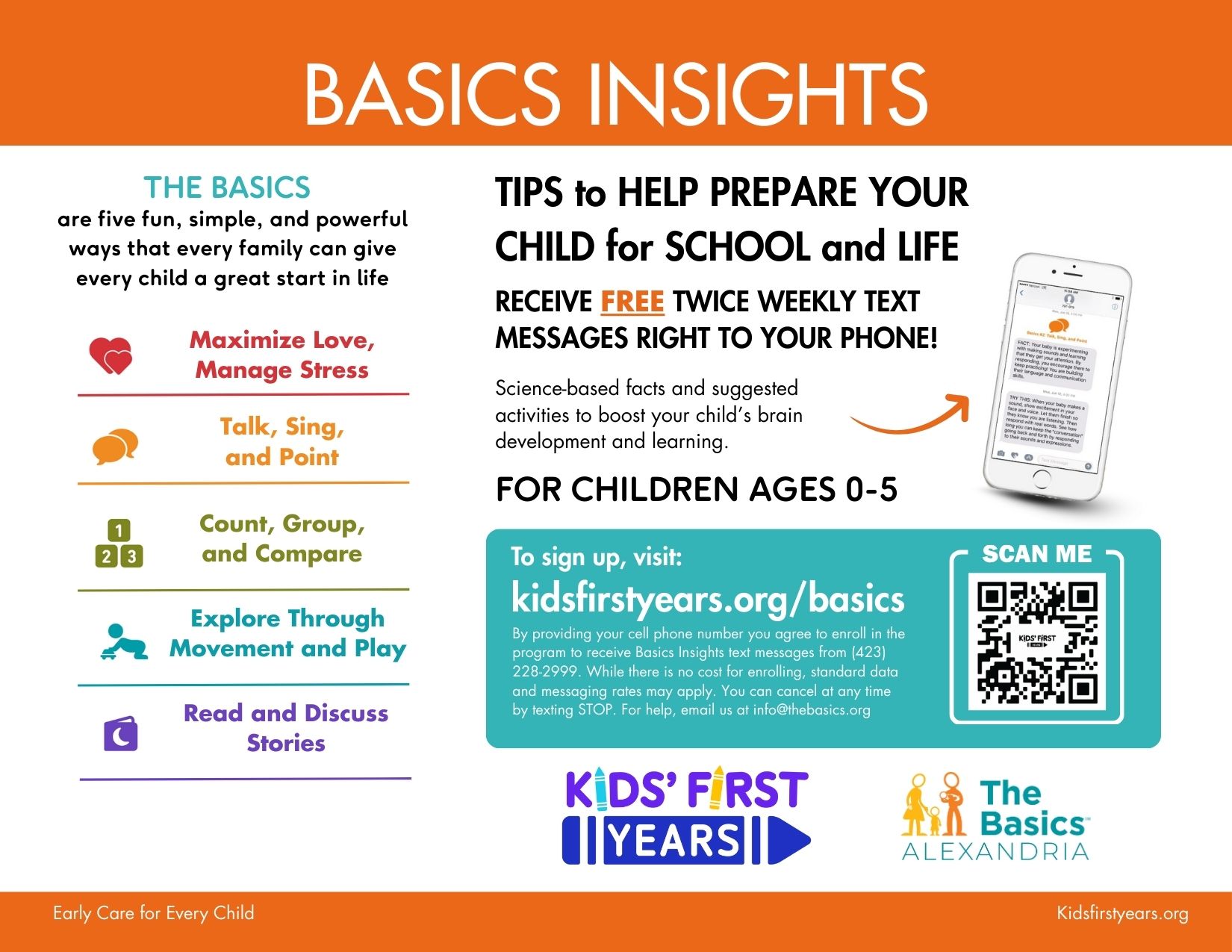
All of the community partners in the Kids’ First Years collective have embraced The Basics, which are five simple yet powerful things that parents and caregivers can do to help children thrive in the early years:
- Maximize Love, Manage Stress
- Talk, Sing, and Point
- Count, Group, and Compare
- Explore through Movement and Play
- Read and Discuss Stories