
Alexandria’s Tomb of the Unknown Revolutionary War Soldier Honored in DAR Ceremony
Tribute Highlights City’s Role as America Marks 250 Years Since 1776

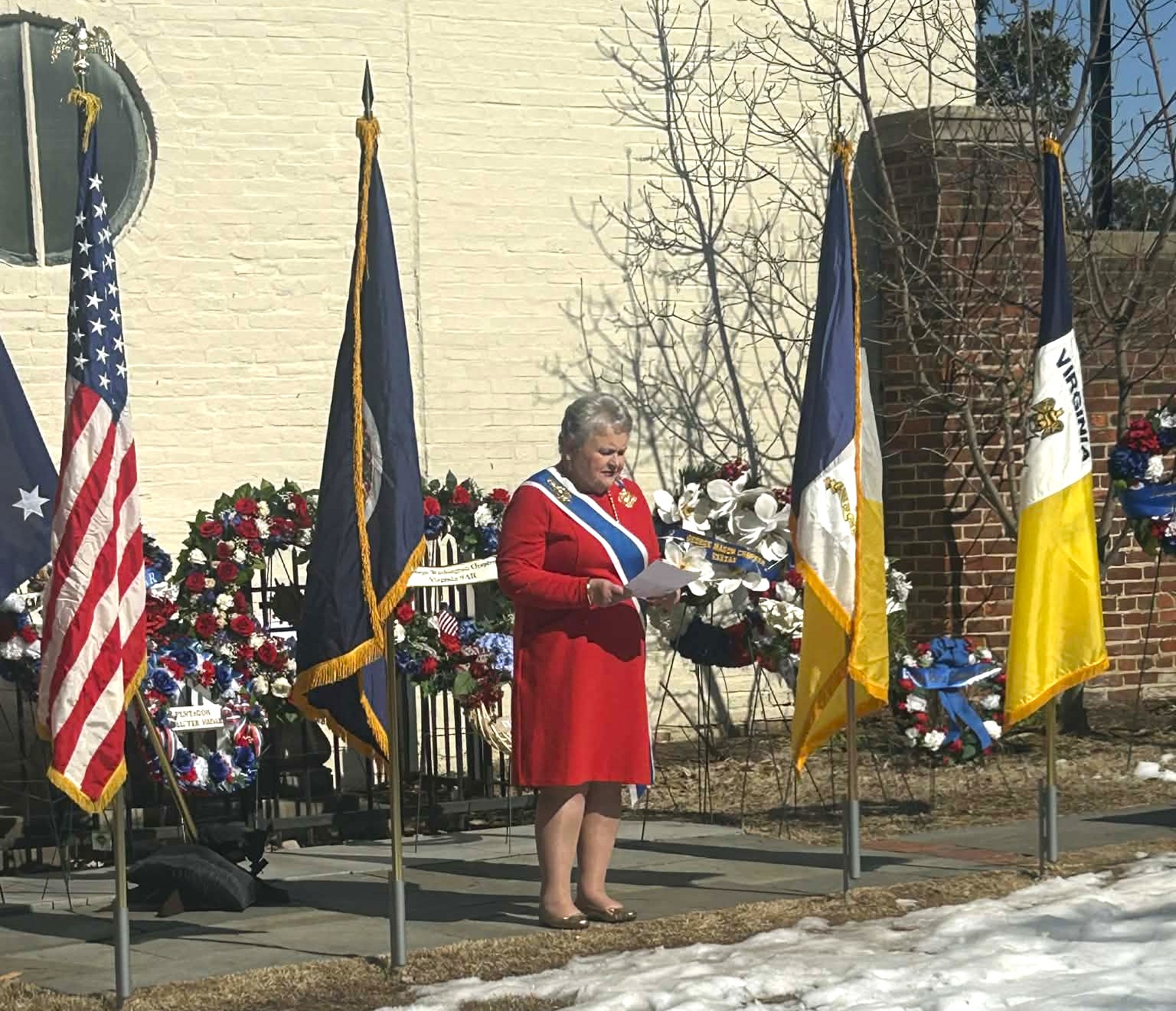
ALEXANDRIA, VA – Before the winter sun reached its midday height on Saturday, February 14, a quiet and deeply moving tribute unfolded in the churchyard of the Old Presbyterian Meeting House. As the nation begins commemorating the 250th anniversary of the American Revolution, community members gathered at Alexandria’s Tomb of the Unknown Revolutionary War Soldier.
At noon, community members gathered for a wreath-laying ceremony held just hours before the annual George Washington Birthday Parade. While anticipation for the afternoon’s festivities built across Alexandria, those assembled in the historic burial ground paused to honor sacrifice, service, and the enduring legacy of the Revolutionary generation.

The sun shone brightly overhead, casting long shadows across the cemetery grounds. Patches of snow and ice from a recent harsh winter storm lingered among the gravestones, heightening the moment’s poignancy. The Tomb of the Unknown Revolutionary War Soldier stood at the center of the gathering, a stark and powerful reminder that the freedoms celebrated each year were secured at great cost.
Holding the ceremony before the parade served as a deliberate reminder that celebration and remembrance go hand in hand. The churchyard itself carries profound historical resonance; its bell tolled in 1799 to announce the death of George Washington, whose leadership and presence remain woven into Alexandria’s identity.
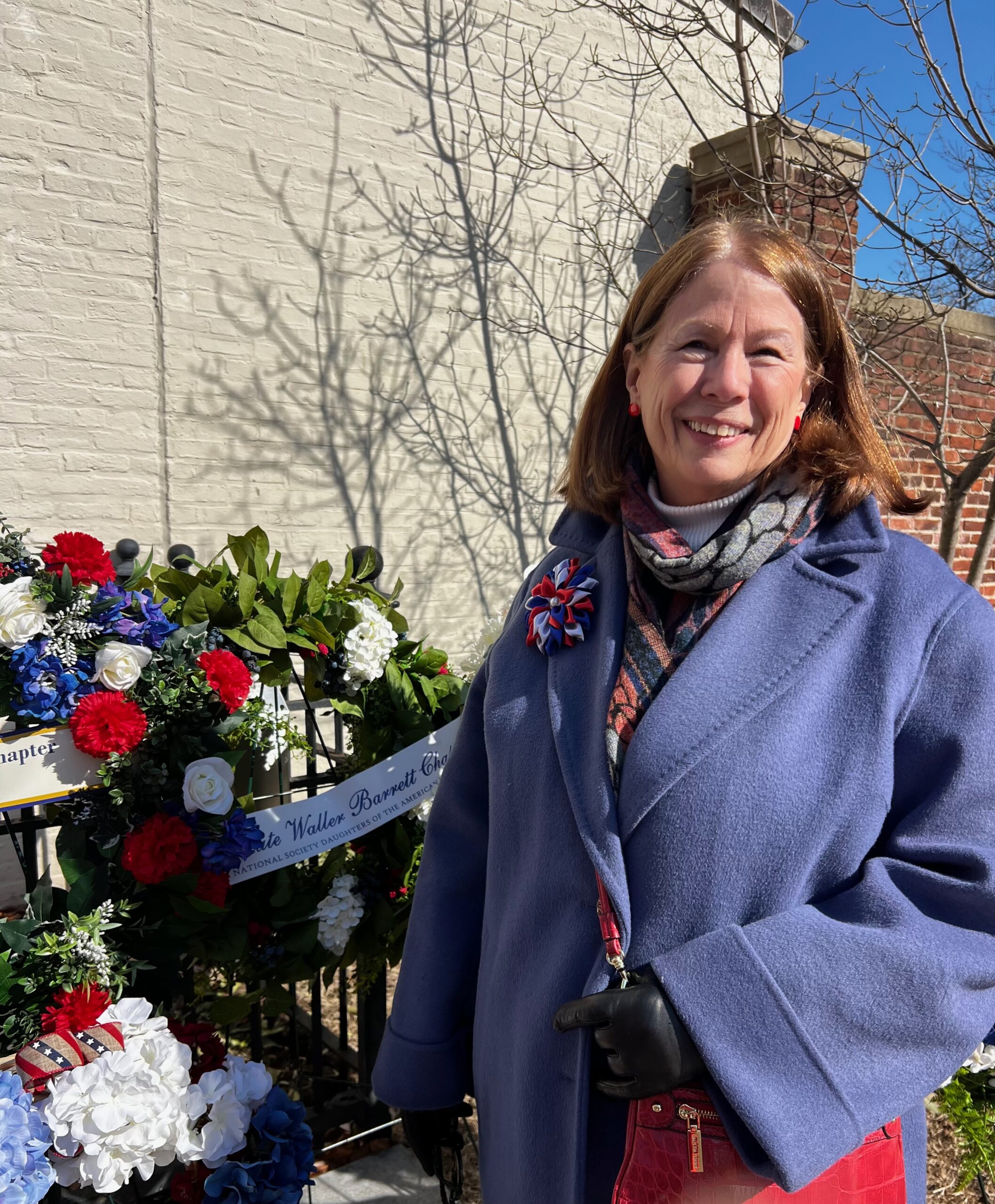
The ceremony was organized by the Kate Waller Barrett Chapter of the Daughters of the American Revolution (DAR), continuing a longstanding tradition of honoring Revolutionary War patriots in the city. Chapter Regent Margaret Kane and numerous chapter members attended, joined by DAR members from Northern Virginia and Washington, D.C. Virginia State Regent Kathleen Mayer Rugh was present, underscoring the importance of the occasion within the statewide organization.
Members of the Sons of the American Revolution also participated, reflecting a shared commitment among hereditary societies to preserve and promote Revolutionary history.


Fourteen wreaths formed a striking backdrop behind the podium, each adorned with ribbons bearing the names of contributing DAR chapters and the Sons of the American Revolution. The display created a vivid tableau of unity and shared purpose as speakers addressed the crowd.
The program opened with a tribute to George Washington, honoring his leadership during the Revolutionary War and his enduring ties to Alexandria. Speakers emphasized that Washington was not only a national icon, but also a neighbor whose life intersected with the very streets and sanctuaries that still shape the city today.

Among the distinguished guests was Ginnie Sebastien Storage, President General of the National Society Daughters of the American Revolution. The Reverend Thomas A. Costa and his wife, Susan Costa, attended in 18th-century attire, lending a visual reminder of the era being commemorated. Local civic leaders, veterans’ organizations, and Alexandria residents stood together in quiet reflection.
In her remarks, President General Storage captured the spirit of the ceremony:
“As members of the Daughters of the American Revolution, we are committed to honoring the patriots who secured our liberty. Even when a name is unknown, the sacrifice is not forgotten.”
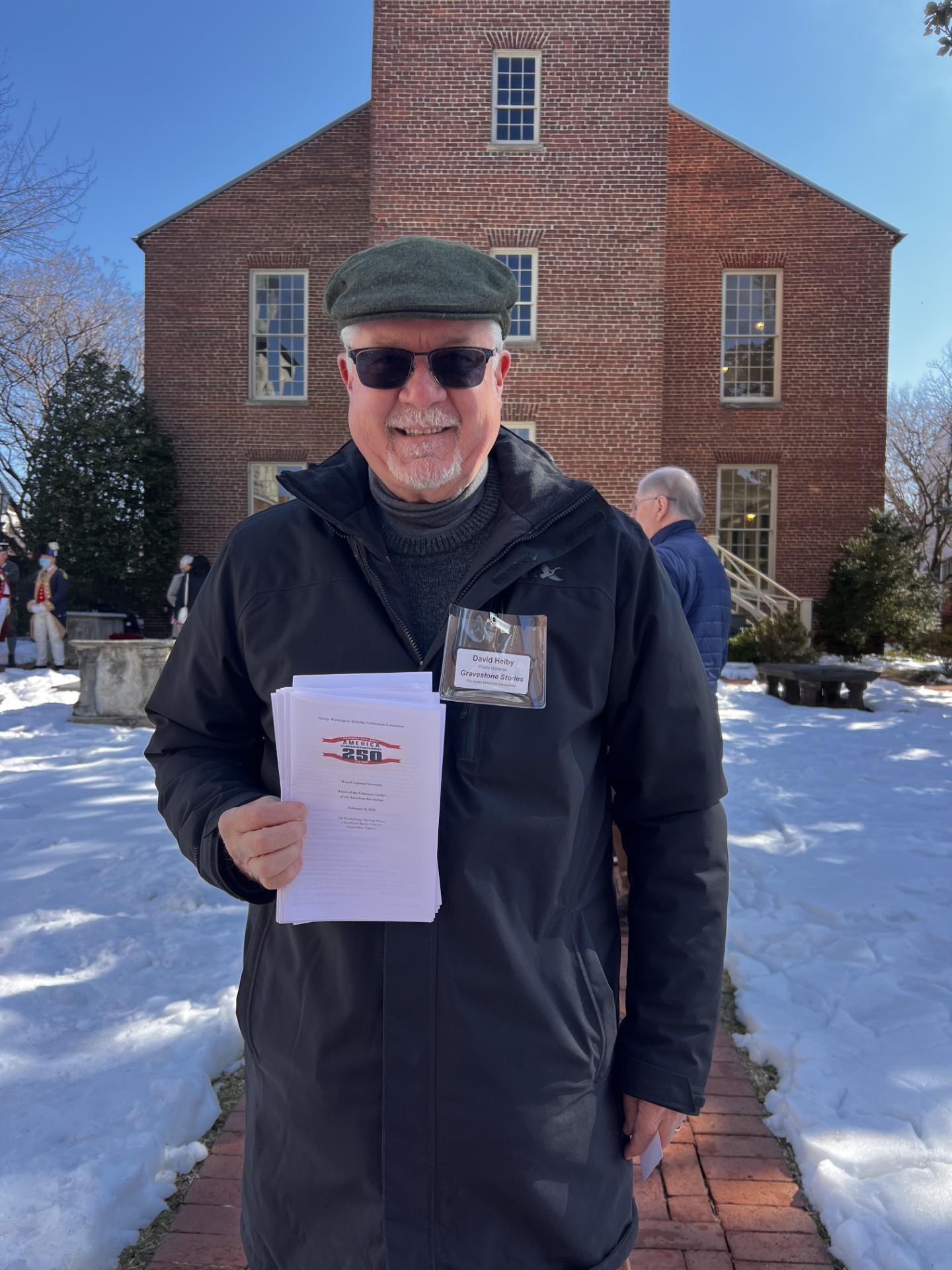
For longtime congregant and local historian David Heiby, the ceremony represents more than tradition.
“This isn’t just a ceremony—it’s a real connection to 1776,” he said. “It connects our faith, our history, and the enduring promise of our country.”
The ceremony concluded with a simple but powerful act. One by one, attendees stepped forward to place a single red rose at the tomb. As the roses accumulated around the memorial stone, they transformed the site into a vivid symbol of collective gratitude—an unmistakable reminder that while some names may be lost to history, their legacy endures.
📜 Sidebar: What Is Alexandria’s Tomb of the Unknown Revolutionary War Soldier?
Located in the churchyard of the Old Presbyterian Meeting House, the Tomb of the Unknown Revolutionary War Soldier marks the burial site of an unidentified patriot believed to have fought in the American Revolution.
The remains were discovered during construction work in the early 19th century and later reinterred with honor. Though the soldier’s name is unknown, historians believe he may have been wounded during the war and brought to Alexandria before his death.
Over time, the tomb became a place of remembrance for all unnamed patriots of the Revolution. As the nation commemorates 250 years since 1776, the site stands as a powerful reminder that independence was secured not only by famous leaders but by ordinary individuals whose sacrifices shaped the country’s future.


