Alexandria’s Biggest Waterfront Bet Moves Forward—Now It’s Your Turn
Mayor Alyia Gaskins urges residents to weigh in as public input begins May 4

ALEXANDRIA, VA — One of the most consequential redevelopment projects in the city’s history is entering a critical new phase—and city leaders are urging residents to speak up now while plans are still taking shape.
In a video message released this week, Alyia Gaskins called on the community to get involved as the former Potomac River Generating Station site in Old Town North advances toward detailed approvals.
“We’re entering a really important phase of this project, where community input can help shape what ultimately gets built,” Gaskins said.
A Site With a Long—and Controversial—History
For decades, Alexandria’s waterfront skyline was defined by the towering stacks of the Potomac River Generating Station, a coal-fired power plant that began operating in the late 1940s. Long a source of concern for residents over air quality and environmental impacts, the facility became one of the region’s most debated industrial sites.
After years of community advocacy, the plant shut down in 2012—marking a turning point for the city’s waterfront and opening the door to reimagine one of its most prominent locations.
A Transformational Vision for the Waterfront
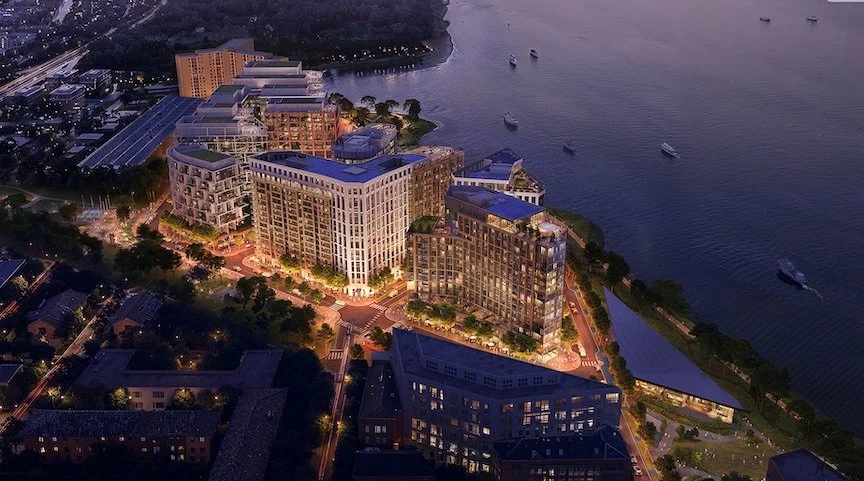
Today, the roughly 20-acre site—now owned by Hilco Redevelopment Partners—is poised to become a walkable, mixed-use district designed to reconnect Old Town North to the river.
Plans call for:
- Up to 2,000 new residences, including approximately 160 affordable units
- Between 500,000 and 1 million square feet of commercial space
- More than 10 acres of public open space
The vision includes waterfront dining, green space, arts and cultural venues, and year-round community programming—from farmers markets to seasonal events.
Design elements emphasize walkability and connection, with wide sidewalks, pedestrian-priority streets, and open-air gathering spaces intended to feel like a natural extension of Old Town.
“Our goal is to ensure this project reflects the values of Alexandria—walkability, sustainability, and connection to the surrounding neighborhoods,” Gaskins said.

What’s Coming to the Waterfront
If realized as proposed, the redevelopment could dramatically expand public access to the Potomac while creating new spaces to live, work, and gather.
Plans include:
- Waterfront restaurants and rooftop gathering spaces
- Public parks, dog areas, and play spaces
- Opportunities for kayaking and river recreation
- A 15,000-square-foot subsidized arts and cultural hub
Buildings will rise in phases, stepping up in height from the Old Town edge to taller structures—up to 16 stories—toward the northern end of the site. Underground parking is planned to keep cars off the streets and prioritize pedestrian space.
Financing the Future: What About the Bonds?
In her remarks, Gaskins also addressed a topic that often raises questions: how the project will be financed.
“As we think about the future of this site, there are also conversations about financing—specifically around bonds that could help support infrastructure and public improvements,” she said.
She stressed that these tools are often misunderstood.
“This is not about putting the burden on taxpayers in the way people might assume,” Gaskins said. “These tools are often structured so that the development itself helps pay for the improvements over time.”
Alexandria has long used bond financing to fund major infrastructure projects, often tying repayment to future revenue generated by development. In this case, bonds could help fund roads, utilities, and public spaces as the site is built out.
“It’s important that residents understand how these decisions are made and have the opportunity to weigh in,” she added.
Deconstruction Comes First
Before new construction begins, the existing power plant must be carefully dismantled—a process expected to start no earlier than 2027.
Rather than a rapid demolition, the plant will be taken down in stages using specialized equipment, including a custom crane with a 160-foot reach. The slower approach is considered safer and more environmentally responsible.
Mitigation measures will include dust, noise, and vibration controls, as well as third-party monitoring and pre-construction surveys for nearby properties.
Next Step: Community Input on Key Decisions
The project is now entering a detailed review phase, with specific development proposals—particularly residential buildings and ground-floor retail—under consideration.
A virtual community meeting is scheduled for May 4 from 6 to 7 p.m., where residents can learn more and provide feedback on Special Use Permit requests tied to upcoming construction phases.
“We want to make sure residents understand what’s being proposed and have a meaningful opportunity to share feedback before decisions are finalized,” Gaskins said.
Why It Matters
Because of its size, location, and history, the former power plant site represents one of the most significant redevelopment opportunities in Alexandria.
“This is one of the most significant redevelopment opportunities we have along our waterfront,” Gaskins said.
Decisions made now will shape the future of Old Town North—from neighborhood character and infrastructure to housing and access to the river.
For now, the familiar smokestacks remain a fixture along the Potomac. But in the years ahead, they may give way to a new chapter—one defined by walkable streets, open space, and a reconnected waterfront.
How to Get Involved
Residents are encouraged to:
- Attend the May 4 virtual meeting
- Submit questions and comments in advance
- Review project materials through the City
- Stay engaged as additional meetings are scheduled