
New Maps, New Routes: Alexandria Prepares for Major School Attendance Shifts This Fall
As ACPS enacts its first major redistricting plan in years, families prepare for redrawn boundaries, deferral options, and updated neighborhood travel routes.


ALEXANDRIA, Va. — Hundreds of Alexandria families are preparing for new school assignments this fall as Alexandria City Public Schools (ACPS) officially enacts its redrawn attendance zones on July 1 ahead of the 2026–27 school year.
The new boundaries—formally adopted by the Alexandria City School Board on June 12, 2025, through Elementary School Triangle Map Plan 3 and Middle School Option E—impact roughly 1,400 currently enrolled students across the division. Following a yearlong outreach and transition effort throughout the 2025–26 academic year, the updated zones are now set to take effect.
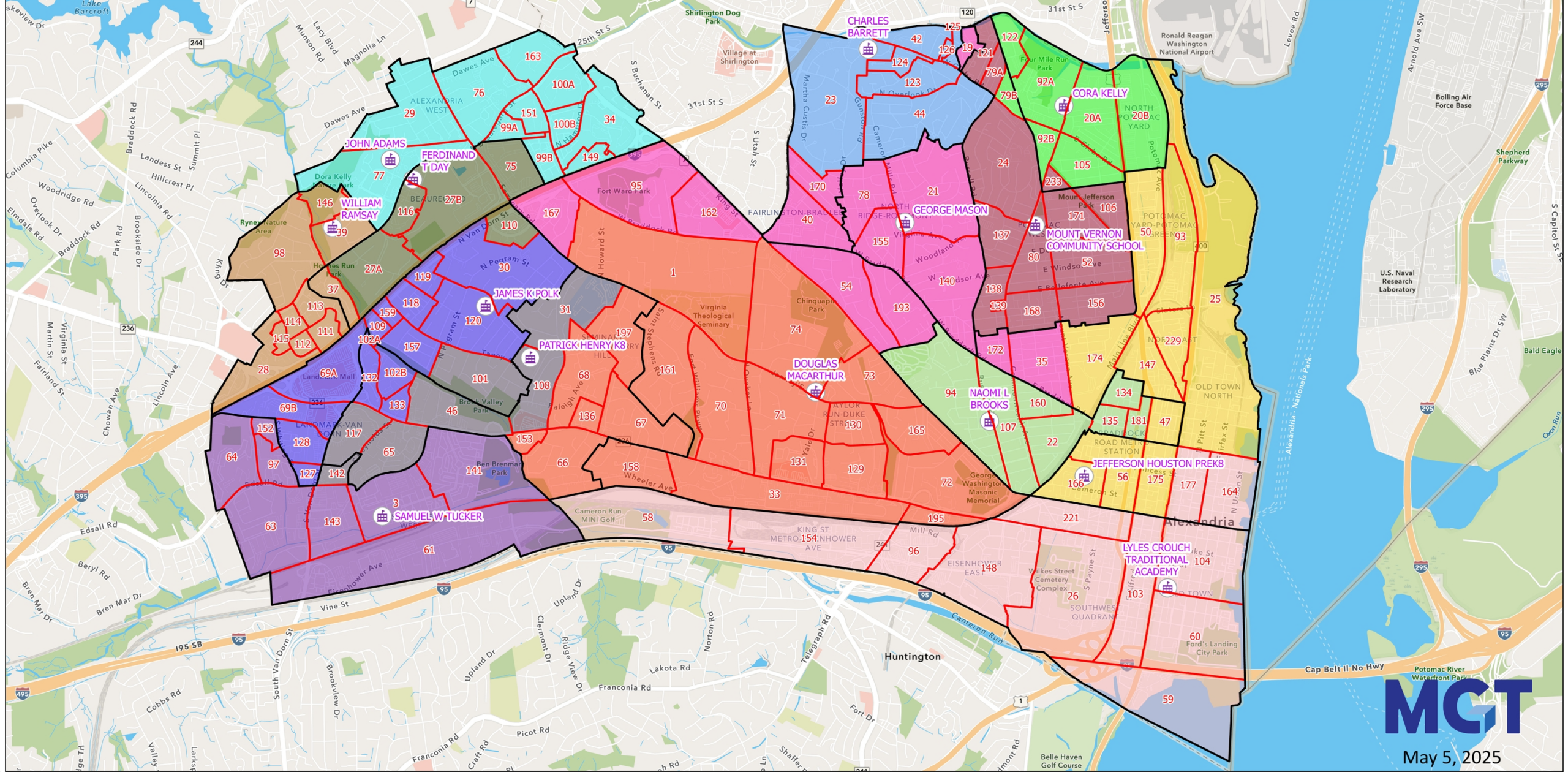
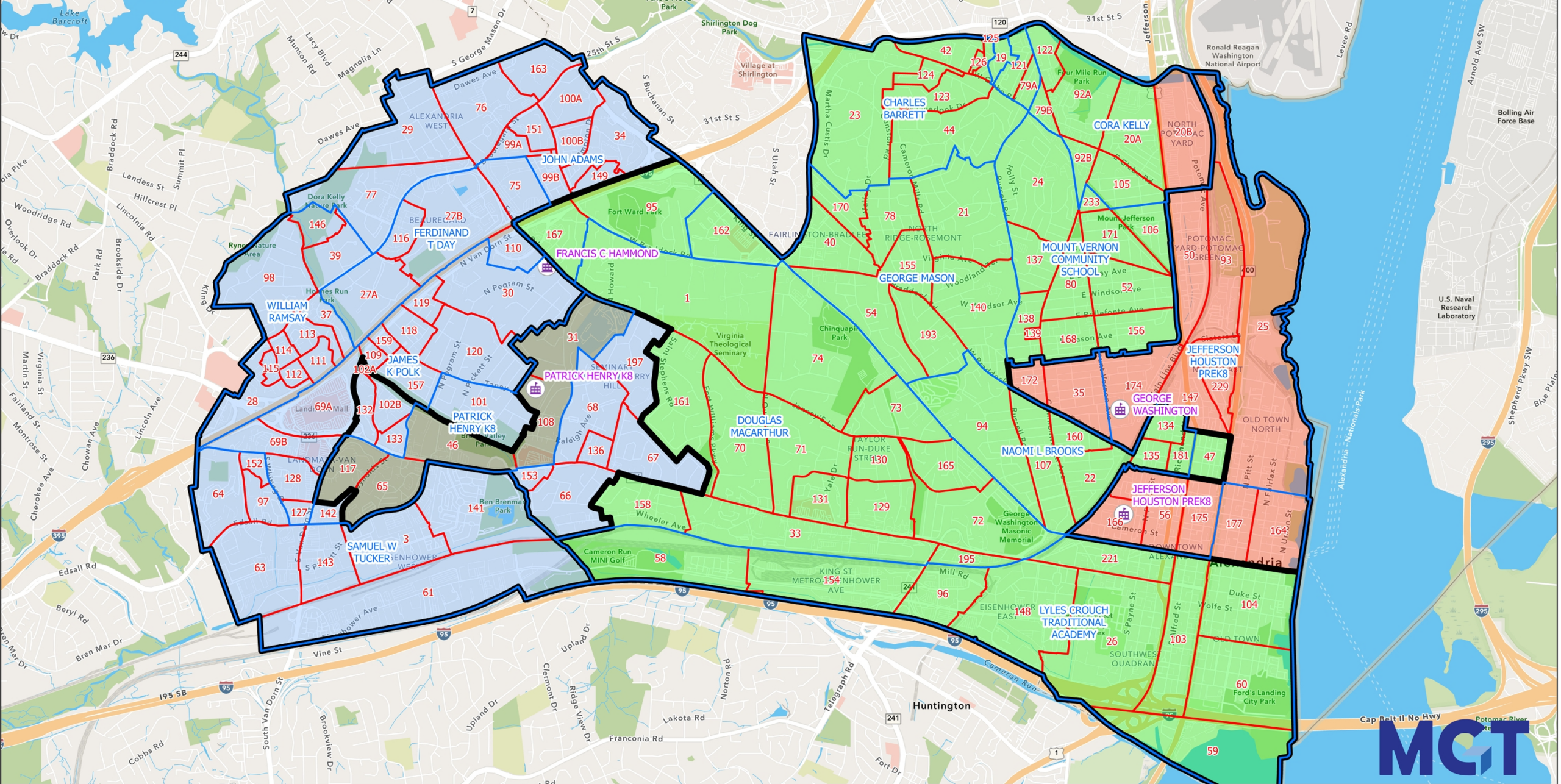
Key Transition Rules & Deferral Options
To ease the transition for students and families, the district’s updated redistricting policy establishes temporary deferrals that allow select groups to remain at their current campuses rather than moving immediately to new boundary schools.
Under one-year deferral guidelines, rising seventh and fourth graders, along with their siblings who submit a request, were eligible to remain at their current school for an additional year.
A two-year deferral option is granted to rising sixth graders, as well as third graders at Douglas MacArthur Elementary School and their siblings.
Specialized accommodations extend beyond standard grade-level deferrals. The district guarantees that students experiencing homelessness or those with placements designated through an Individualized Education Plan (IEP) or programmatic transfer can remain at their existing schools without disruption.
Community Reaction & Divided Views
While district officials framed the boundary overhaul as a vital measure to balance enrollment across overcrowded West End schools, the decision drew swift debate from Alexandria families.
The most intense community feedback centered on elementary communities like Douglas MacArthur Elementary, where a parent-led group called Keep Students Together gathered over 130 family signatures protesting the split of close-knit student cohorts as they transitioned to middle school. Public frustration was also voiced surrounding Middle School Option E—which sets the framework to convert Jefferson-Houston into a dedicated middle school—a move critics argued ran counter to survey data showing support for preserving the PreK–8 structure.
District leaders defended the boundary shifts as an essential step toward operational equity and long-overdue overcrowding relief.
“This redistricting decision-making process aimed to help balance student enrollment across the school division, alleviate overcrowding, and ensure all students have access to equitable resources and opportunities,” district officials stated following the vote.
Officials emphasized that the plan addresses long-term structural needs while building in multi-year deferrals and flexible provisions to give affected families extra time during the transition.

Route Safety & Transportation
As students adapt to new travel routes, local leaders are prioritizing physical safety on the way to and from campus. Through the Safe Routes to School program, the City relies on multidisciplinary walk audits—on-site inspections conducted by civil engineers, urban planners, bicycle and pedestrian specialists, school administrators, and parent volunteers—to evaluate street conditions and recommend infrastructure upgrades around attendance zones.
But concerns remain; parent Caitlyn Ryan emphasizes “that student safety must be the top priority.” She argues that requiring children to cross dangerous, high-traffic roads to get to school exposes them to catastrophic risks from common driving errors.
The Safe Routes to School initiative receives core funding through Alexandria’s Capital Improvement Program, supplemented by competitive regional, state, and federal grants. Crossing guards stationed at key neighborhood intersections will continue to be deployed and managed by the Alexandria Police Department.
Resources for ACPS Families
Families can verify their designated school assignment and bus transportation eligibility by entering their street address into the online ACPS Attendance Zone Locator.
Specific placement criteria and deferral confirmations were delivered directly to district families during the winter transition period.
Non-emergency traffic or pedestrian safety concerns around school zones can be reported directly through the city’s Alex311 service portal.