
No one expected the 55-55 Nationals to be this good this season. Everyone expected they would be trading veterans with short-term contracts for minor league prospects again. No one expected it to be this complicated. Should they trade hitters for pitchers who can help this season, or for minor league prospects who can help in the future, or not make any moves and see if the current Nats can make the postseason?
With 52 games to go, will the Nationals win three more games than the Phillies, Diamondbacks, Padres, Marlins, Pirates, and Cardinals? That is the unknowable question that affects what the team does by the August 3 trade deadline. The Phillies and Diamondbacks have 57 wins, the next three have 55, and the Cards have 54. The Nats have 55. Two of all those teams will end up with wild card spots in the postseason.
Without a reliable crystal ball the front office has to decide if they will trade hitters like CJ Abrams or trade minor league prospects for better pitching, which is the team’s glaring problem this season, or keep the team together, hope the baseball gods smile on them the rest of the season with three extra wins, and come back next year with the best offense in the majors relatively intact.

The Nationals already made one trade, solid-hitting third baseman Curtis Mead for Boston pitcher Connelly Early. Early has a hopefully minor elbow problem and will hopefully be pitching again later this summer, improving the rotation. Both players are 25, making it a one-for-one challenge trade: looking back in five years or so, which team came out ahead? But the baseball gods are already interfering here. In Mead’s second at bat for Boston he was hit by a pitch and he’s out with a broken wrist. Reminding us that any agonizing decision any team makes at the trade deadline can just go up in smoke over the remaining two months.
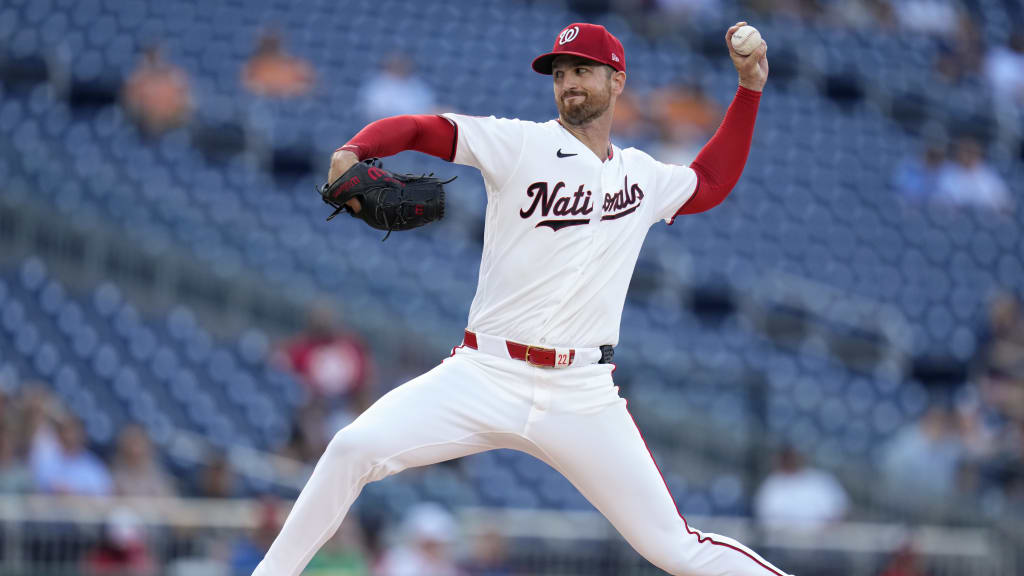
One big decision concerns pitcher Foster Griffin. His early major league career sputtered and he pitched the last three seasons in Japan. The Nationals took a chance on him and signed him to a one year contract. Griffin has responded with a 12-2 record, a 2.72 ERA, and a spot on the All-Star Team. He’s 30 and can be a free agent after this season. He knows this is his chance to set his family up for life, maybe with $45 million over three years. The Nationals could trade him to a contender for younger promising pitchers. They could also offer him the kind of long-term contract that he won’t turn down, keeping the team in contention now and filling a rotation spot for several years.
Another big decision is whether to trade the best hitting shortstop in the Majors, CJ Abrams, for a haul of pitchers and/or prospects. That would be a surrender on this season and would shake up the clubhouse. You can never say don’t do it without knowing what players would be offered in return, but that seems like a bad move. Try to get him to sign a contract extension instead.

Since the All-Star Break the Nationals have won two out of three games from the Athletics, the Rockies, and the Diamondbacks. This week they only took one of three from the lowly Blue Jays and they already lost the first game of four to the Braves. When a team is on the postseason bubble the decisions for the front office are extremely complicated. The team could have made them a lot easier with a nice winning streak.
The players know which of their teammates on short contracts could be traded if management decides to deal them for minor league prospects. Winning the remaining three games from the first place Braves would show that the Nats can win a series from a team that will in all likelihood be in the postseason. That could convince management to keep the team intact, trade prospects for a couple of better pitchers, and keep the team on course for an exciting postseason race. So let’s win three!!