
Alexandria Moves to Modernize Historic Design Guidelines
A Well-Attended, Informative Meeting Brings Residents and Preservation Officials Together in a Spirit of Collaboration

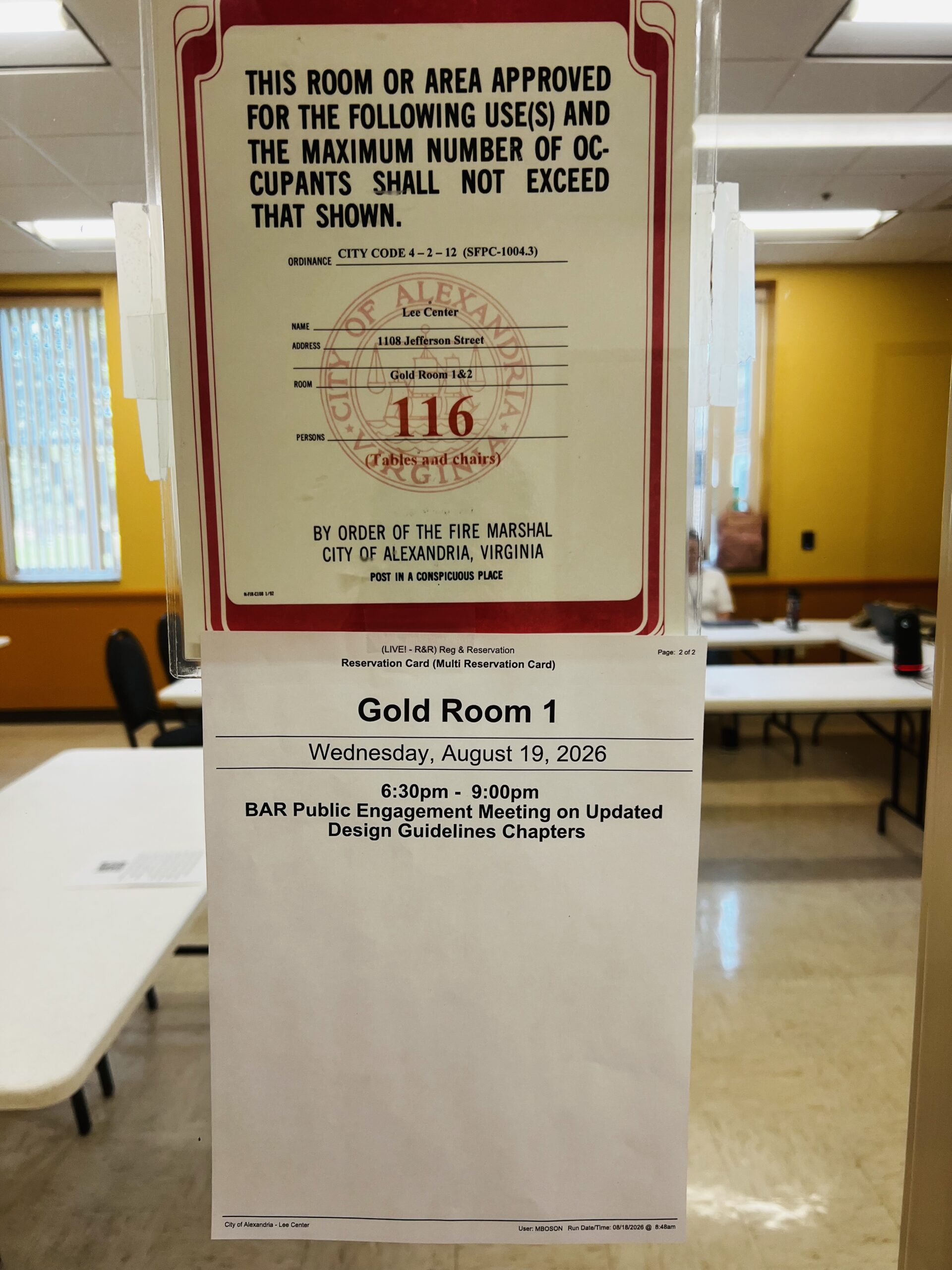
Alexandria, Va. – Alexandria preservation planners met with a well-attended audience on Aug. 19 at the Nannie J. Lee Community Center.
The meeting focused on a major update to the city’s historic design guidelines. The proposed changes address new technology, faster approvals, and greater consistency.
The presentation was informative and congenial. Residents and neighborhood leaders also had an opportunity to ask questions.
Historic Preservation Division planner Brendan Harris led the presentation. Principal planner Julie Weisgerber and preservation architect Bill Conkey also participated.

Together, they outlined proposed updates to 11 chapters. The chapters govern changes in the Old and Historic Alexandria District and the Parker-Gray District.
The effort is part of a multiyear project by the Board of Architectural Review Design Guidelines Committee. Formed in 2019, the committee is replacing the city’s foundational 1993 guidelines.
However, planners stressed that the project is not a complete rewrite of preservation policy.
Instead, the goal is to modernize an outdated system. The new format would also be searchable and ADA-accessible. In addition, it would use color-coding, updated terminology, and high-resolution diagrams.
Modernizing Preservation Standards
One major change involves modern technology. The original guidelines were written before many current technologies existed. Therefore, the proposed update adds standards for newer equipment.
For example, the package includes guidelines for electric vehicle charging stations. It also addresses building-mounted small-cell facilities.
In addition, some residential installations on private property could receive administrative approval.
The revisions would also clarify building terminology. For instance, the guidelines would distinguish between “street-facing” and “non-street-facing” elevations.
This change could reduce confusion during the review process.
The guidelines would also classify buildings by age. “Early” buildings were constructed before 1932. “Later” buildings were built after 1931.
As a result, the level of review could vary according to a building’s architectural age.
Greater Consistency Between Districts
Another goal is to bring Parker-Gray standards closer to Old Town standards.
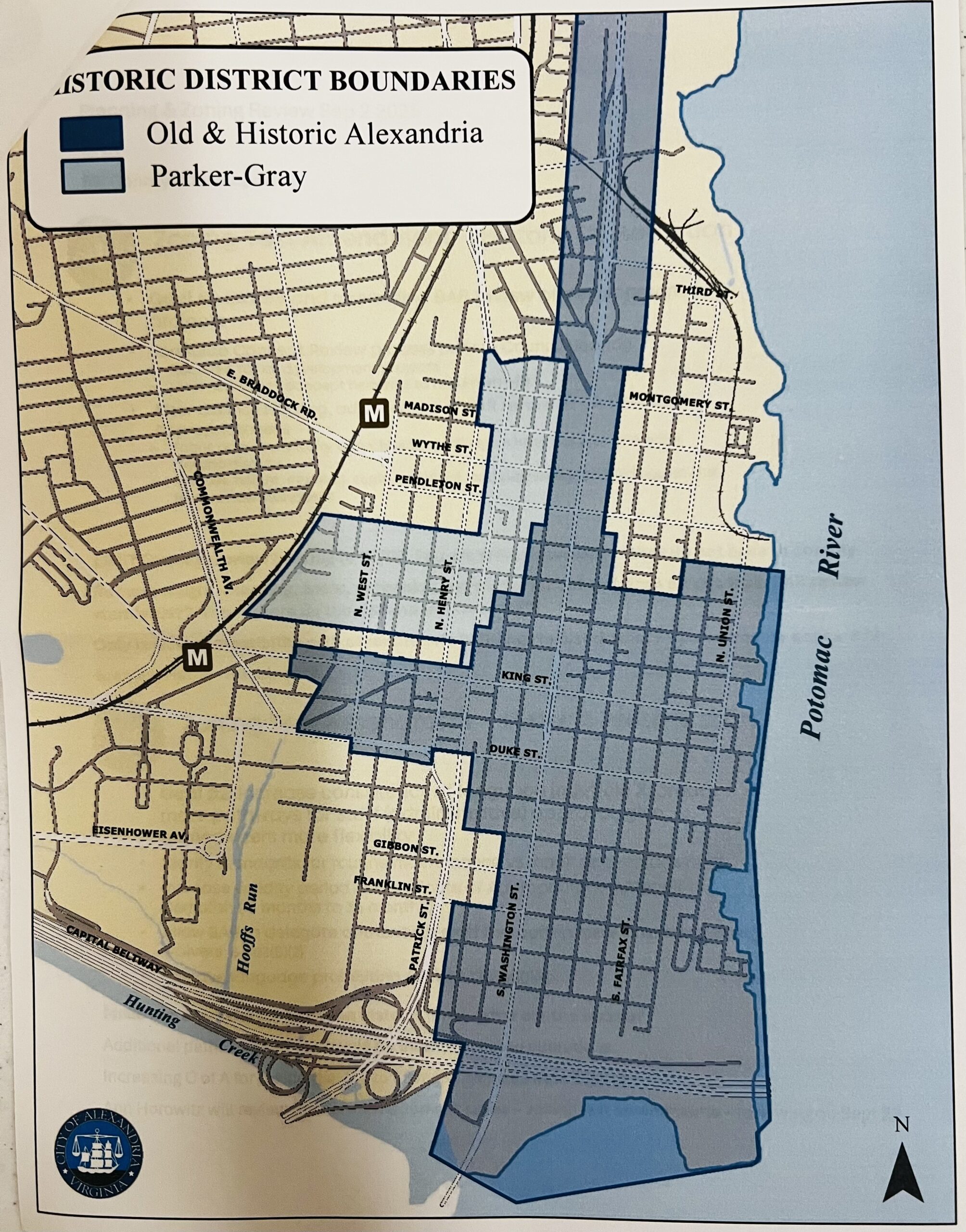
For example, Parker-Gray rules for sheds and other accessory structures would change. Structures up to 65 square feet and 8 feet tall would require administrative review.
The change would match Old Town standards.
Utility meters would also receive closer review. New or relocated meters in Parker-Gray would require staff approval.
Meanwhile, existing exemptions for some non-front elevations would end.
Porches, decks, and planters would also be subject to revised review standards. New or replacement porches visible from public streets could require a full BAR hearing.
Similarly, deck construction in Parker-Gray could move to board review.
Planter walls would receive different levels of review. The wall height and the building’s age would determine the process.
Some smaller projects could become easier, however. Exterior accessories, such as small bank deposit boxes, could receive administrative approval.
That approach could save valuable board time.
Staff reported that 408 of 556 BAR cases last year received administrative approval. Therefore, routine matters could be handled more efficiently.
The change would allow the BAR to focus on more significant preservation issues.
Residents Welcome the Discussion
Overall, the proposed changes received generally positive reactions.
Residents and neighborhood leaders also raised thoughtful questions.
“What they presented here seems very reasonable and well thought out,” said Steve Davidson, chair of Agenda: Alexandria.
Scott Corzine, an Old Town Civic Association board member, also welcomed the changes. “I think it’s reasonable, well thought out, and their intake process seems really pliable,” Corzine said. However, he emphasized the association’s main concern. “Our focus is on making sure changes in guidelines, rules, and process don’t imperil the essential character of the Old and Historic District,” he said.
North Old Town resident Melissa Kuennen attended to better understand the proposed changes. She was especially interested in whether the two historic districts would become more consistent. “I was here just to see what level of change is happening to the design guidelines,” Kuennen said.
She also said greater consistency could reduce confusion for residents. Kuennen noted that some homes in the two districts are similar in age. She said preservation should continue to protect Alexandria’s historic character, scale and materials. “That is what Alexandria is known for,” she said.
During the question-and-answer session, residents raised several concerns. Those topics included EV charging, airport noise and single-pane windows.
Residents also asked which recommendations would be enforceable.
Planners explained that the guidelines provide qualitative standards for BAR reviews. The board uses those standards when considering Certificates of Appropriateness.
However, failing to meet the guidelines can still give the BAR grounds to deny an application.
Public Comment Continues
The public comment period for the current 11 chapters remains open through Sept. 2. Afterward, city staff will incorporate community feedback into the final drafts. The revised guidelines are expected to go before the BAR for formal adoption hearings in October.
The work will continue next year.
An additional 12 chapters are scheduled for review in early 2027. Those chapters will address storefronts, additions, accessibility and demolition.
For residents in Alexandria’s historic districts, the changes could have a direct impact.
At the same time, the city faces a delicate challenge.
The guidelines must become easier to use and more responsive to modern needs. Yet they must also protect the historic character that makes Alexandria distinctive.
The Aug. 19 meeting showed that residents want both goals. Just as importantly, they want a voice in how the city gets there, and the BAR’s review process shows it welcomes their voice.
For the drafts of the specific guideline changes, see Old and Historic District Draft Chapters and Parker-Gray District Draft Chapters.


