
Native Plants for Alexandria Gardens: Small-Space Landscaping Tips
Using Native Plants in Alexandria Gardens

By Eleanor Trice, Elizabeth Gelfer, and Dereth Bush
Commission Co-Chairs and Commissioner, Alexandria Beautification Commission
Alexandria, VA – The Alexandria Beautification Commission recently wrapped up its annual van tour to evaluate nominations for the 2026 Alexandria Beautification Awards. The annual awards honor local residents, businesses, and organizations that use sustainable practices to enhance Alexandria’s green spaces and visual character. The awards recognize landscapes that demonstrate thoughtful design, environmental stewardship, and a commitment to improving the places where people live, work, and gather. The 2026 award winners will be announced later this year.
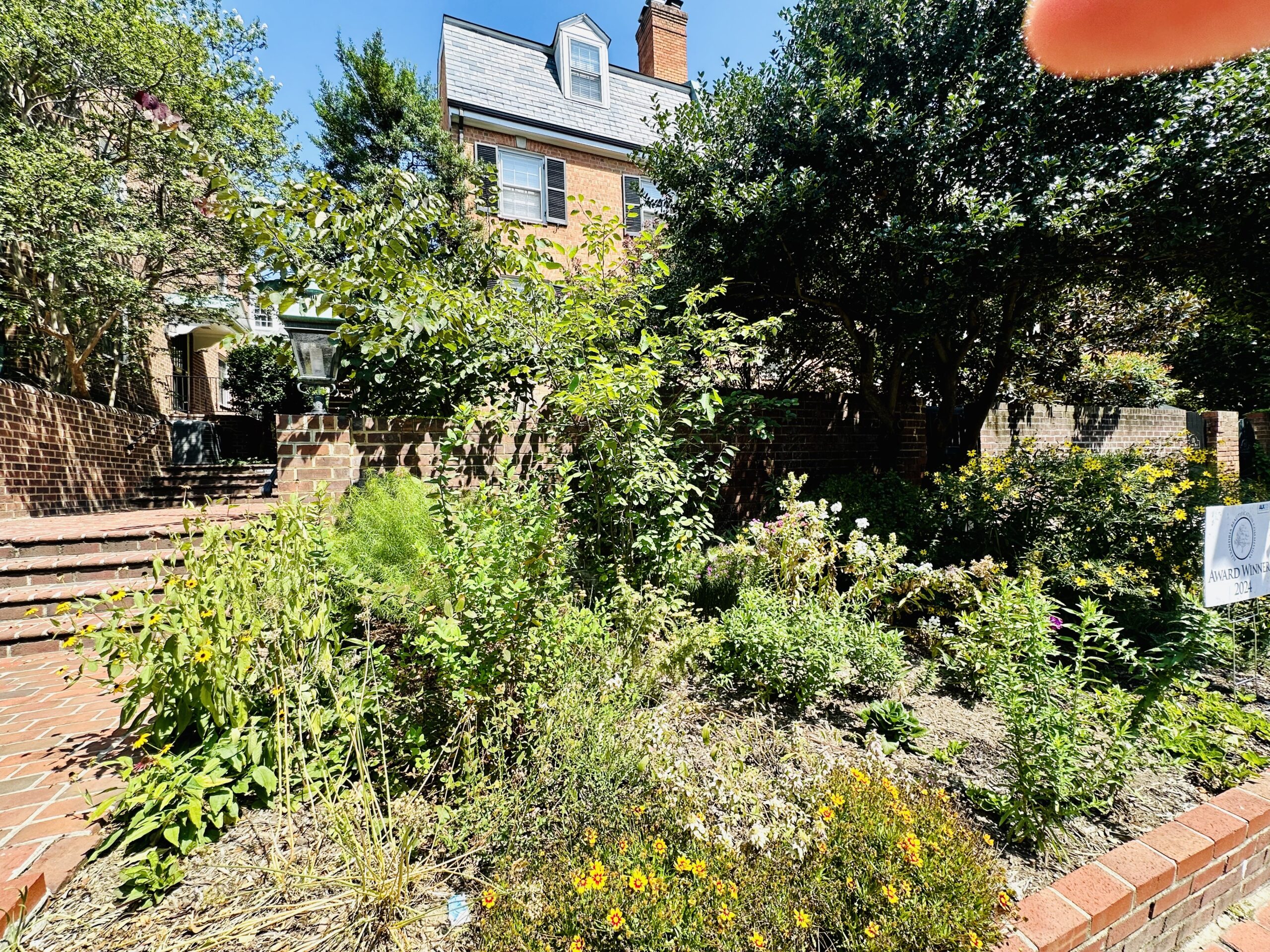
During the tour, commissioners witnessed a remarkable variety of Alexandria properties, showcasing smaller no-mow (or low-mow) yards and expansive gardens to commercial grounds, proving that sustainable practices can flourish in any environment. A stoop or narrow planting strip can make a big impact when designed with the right plants and practices. Even limited outdoor spaces can support pollinators, improve stormwater management, and add beauty to a neighborhood.
Native plants are a great choice for creating a sustainable landscape in a small space. Because they are adapted to Northern Virginia’s climate and soils, they require less maintenance while providing important benefits for local wildlife. Their deep roots help absorb rainwater, reduce runoff, and support pollinators such as butterflies, bees, and birds. A small garden can include sun-loving plants like butterfly weed, purple coneflower, and black-eyed Susan, or shade-tolerant options like Pennsylvania sedge, coral bells, and Virginia sweetspire. For those with room, small native trees such as Eastern redbud, flowering dogwood, hackberry, and serviceberry add seasonal beauty and wildlife value without overwhelming a landscape.
Resources such as the Master Gardeners of Northern Virginia (MGNV.org) and Plant Northern Virginia Natives (PlantNOVAnatives.org) can help residents choose plants suited to their space and find local sources. Alexandria residents may also qualify for Stormwater Utility fee credits by adding practices such as conservation landscaping, rain gardens, rain barrels, or native trees. The City’s Flood Mitigation Grant Program may also help reimburse eligible flood protection improvements.
Just as important as planting natives is removing invasive species that crowd them out. Two common problem plants found in Alexandria landscapes are English ivy and nandina, also known as heavenly bamboo. English ivy spreads aggressively, climbs trees, and reduces habitat value. Instead of pulling ivy from tree trunks, cut the vines at the base and remove the groundcover once it dies back. Native alternatives such as golden ragwort, wild ginger, and creeping phlox provide attractive groundcover while supporting local ecosystems.
Nandina spreads through bird-dispersed berries and can form dense thickets that displace native plants. Removing the root ball is the most effective way to eliminate established plants. Consider replacing nandina with native shrubs such as winterberry holly, inkberry, or Virginia sweetspire.
Whether you have a large yard or a narrow planting strip, thoughtful landscaping choices can make a meaningful difference. By choosing native plants and removing invasive species, Alexandria residents can create beautiful spaces that support pollinators, protect local waterways, and contribute to a more sustainable city.


