
Historic Alexandria Awarded 2026 Chocolate History Grant
Historic Alexandria receives national funding to expand 18th-century chocolate programming, highlighting Alexandria’s role in early American trade and culture.

ALEXANDRIA, VA – On February 20, 2026, the Heritage Chocolate Society held its annual gathering in Washington, D.C., awarding six grants totaling $52,800. Among this year’s recipients, Historic Alexandria was honored with the Forrest E. Mars Jr. Chocolate History Grant.
The Heritage Chocolate Society supports research and educational programming at historic sites, museums, and educational institutions across the United States. These programs focus on the history and future of chocolate.

What Is the Forrest E. Mars Jr. Chocolate Grant?
The Heritage Chocolate Society’s annual gathering was established in 2003 by American History Advocate Forrest E. Mars Jr. The Forrest E. Mars Jr. Chocolate Grant funds historic discovery and storytelling through the lens of chocolate. As a result, the public better understands chocolate’s impact on American history and culture.
Since the program launched in 2013, nearly $700,000 has been awarded to support 69 grant projects. These projects are spread across 36 organizations in North America.
How Will Historic Alexandria Use the Chocolate History Grant?
According to Liz Williams, Deputy Director, Office of Historic Alexandria, Historic Alexandria will use the Forrest E. Mars Jr. Chocolate Grant “to support a historic chocolate demonstration during the Sails on the Potomac Festival, June 12-14, 2026. This activity will anchor the “250th History Village,” a group of tents featuring local history museums and organizations alongside the four tall ships that visitors will be able to tour.”
The demonstration builds on “the established success of Historic Alexandria’s chocolate programming at Gadsby’s Tavern Museum through the Junior docent program, as well as research around chocolate and 18th-century trade in Alexandria. Being at the waterfront, this demonstration will more directly tie to Alexandria’s important role as a port city.”
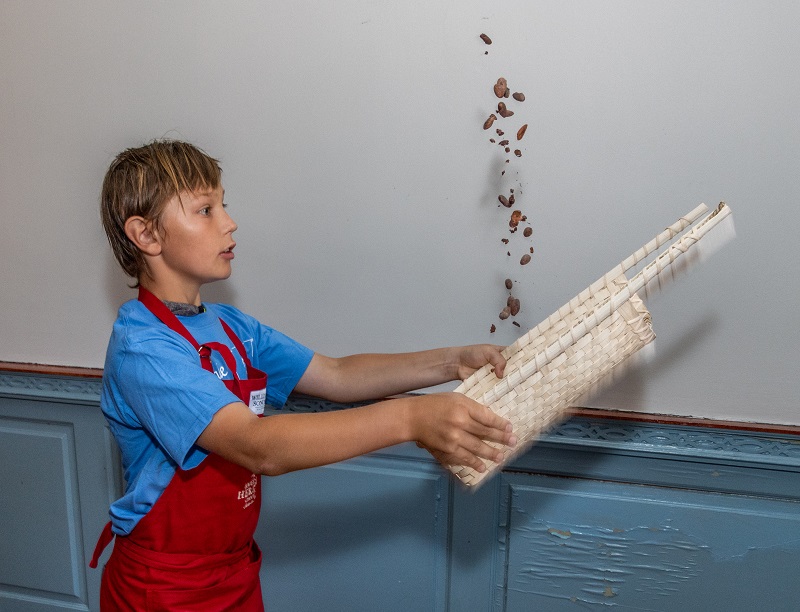
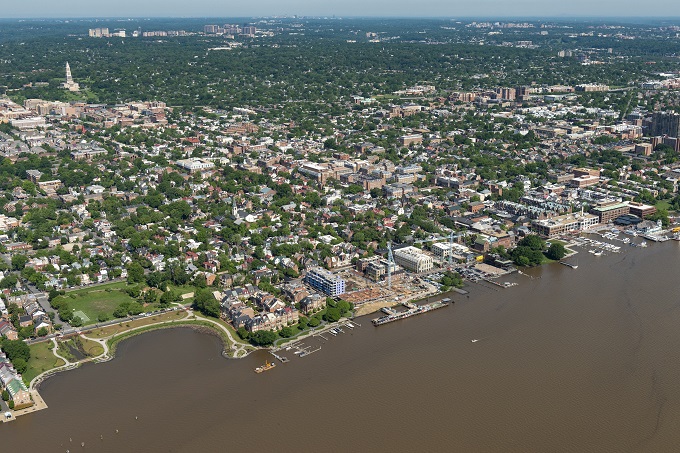
Chocolate plays an important role in telling Alexandria’s story. It is not just a “well-loved confection,” but “[Chocolate] [can] [help] [people] explore Alexandria’s global trade connections and exam the roles of race, gender, and social class in the 18th century” says Williams.
Chocolate in the 18th Century: Why It Mattered
Chocolate’s story stretches back more than 3,500 years. Historian Dave Borghesani at Mars Snacking explains, “Chocolate connects people, culture, and traditions through one of the world’s most enjoyed foods. Since it was first enjoyed over 3,500 years ago, people have been sharing the many ways that they have enjoyed the taste of chocolate. Through the lens of people through history, we can understand the importance that chocolate played in the lives of people, including many famous Americans, including several of our Founding Fathers.”
In the 18th century, chocolate was consumed in several forms—most commonly as a drink. Borghesani notes, “We can trace the many ways that chocolate was enjoyed in the 18th century, including where it was served, how it was prepared, and who was involved in its preparation. Chocolate was a drink that was served in public houses (taverns) where people gathered to share their stories.”
How Chocolate Was Transported and Prepared in the 1700s
Chocolate was also portable. Borghesani says that “chocolate was portable and would be carried by soldiers and explorers. It was also a drink that required people of means to have their own ‘chocolate service’ designed to entertain guests.”
Preparing chocolate in the 18th century required significant effort. “Cacao beans were ground and spices were added to flavor the chocolate, creating a very different experience than what we enjoy in the 21st century.”
The chocolate drinks enjoyed by the Founding Fathers likely tasted far different from today’s hot cocoa.
What Special Properties Was Chocolate Believed to Have?
In the 18th century, chocolate was often associated with medicinal benefits. Borghesani explains, “ During the 18th century there were many theories about what chocolate possessed, but there were no specific evidence behind it. Chocolate was believed to cure a number of ailments including relief from headaches, stomach aches, nervous conditions, consummation, [and] [many] [other] [ailments].”
Despite these claims, taste remained the primary reason people drank chocolate. Borghesani adds, “ People needed foods that were filling but had nutritional properties which cacao possess. Chocolate is stimulating because of the caffeine and theobromine that it possesses, but whether it cured any illness is up for debate.”
From colonial taverns to modern festivals, chocolate has long been woven into cultural traditions. Whether served as an 18th-century spiced drink or today’s favorite sweet treat, its historical impact continues to be explored.
For more information about the Heritage Chocolate Society, visit www.AmericanHeritageChocolate.com to explore its mission, grant programs, and chocolate history initiatives.
You can also follow the Heritage Chocolate Society on Facebook, Instagram, Twitter, and Pinterest for updates, educational resources, and event news.





The Heritage Chocolate Society supports research and educational programming at historic sites, museums, and educational institutions across the United States. Sprunki
It’s fascinating to see local history and chôclate hẻitage come together in this grant project about Her Trees. Preserving stories likes these can make Alexxandria’s past much more meaningful for future.
It turns out my favorite chocolate has such an impressive history. The sweet and bitter taste of chocolate captivates me.
It is fascinating how something as everyday as chocolate can serve as such a rich lens for exploring 18th-century history, global trade, and social dynamics. Historic Alexandria using their Forrest E. Mars Jr. Chocolate History Grant to host live demonstrations at the Sails on the Potomac Festival sounds like a fantastic, immersive way to bring colonial history to life for visitors.