
Alexandria Writer Jeffrey Higgins Warns Fellow Authors about AI Ideas
Owner of Elaine's and its Literary Salon Urges Staying "Authentically Human"

Alexandria, VA – Creativity and imagination—once considered exclusively human traits—may be endangered as Artificial Intelligence (AI) moves beyond simple assignments and routine tasks. With AI increasingly taking on those human traits, are our brains beginning to atrophy from convenience?
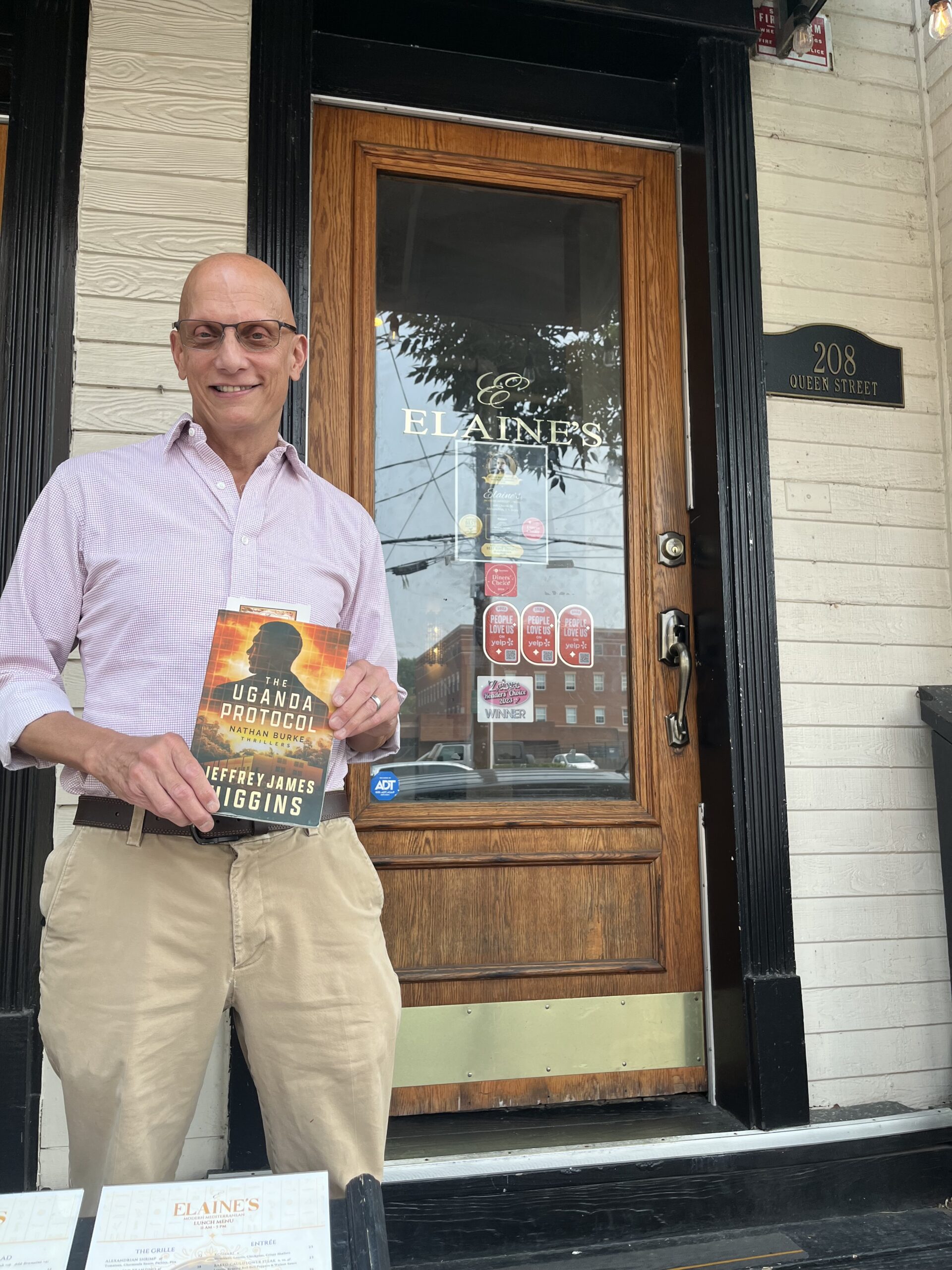
Long-time novelist and Alexandria-based writing coach Jeffrey James Higgins warns fellow authors to avoid the allure of AI “ideas” and continue developing their own higher-level thinking so their work remains “authentically human.”
Higgins says he has already seen authors relinquish autonomy in plotting storylines and developing characters, becoming dependent on AI to solve challenging plot points or writer’s block. He believes writers should value the sanctity of their original ideas and consider the consequences of allowing AI to contribute too deeply to their work.
“What AI is doing today and what AI will be doing in a couple of years defies our imagination,” said Higgins. “The fact is it is going to change everything,” he noted, adding that even the technology industry is facing a philosophical divide over how AI should be created, guided, and monitored.
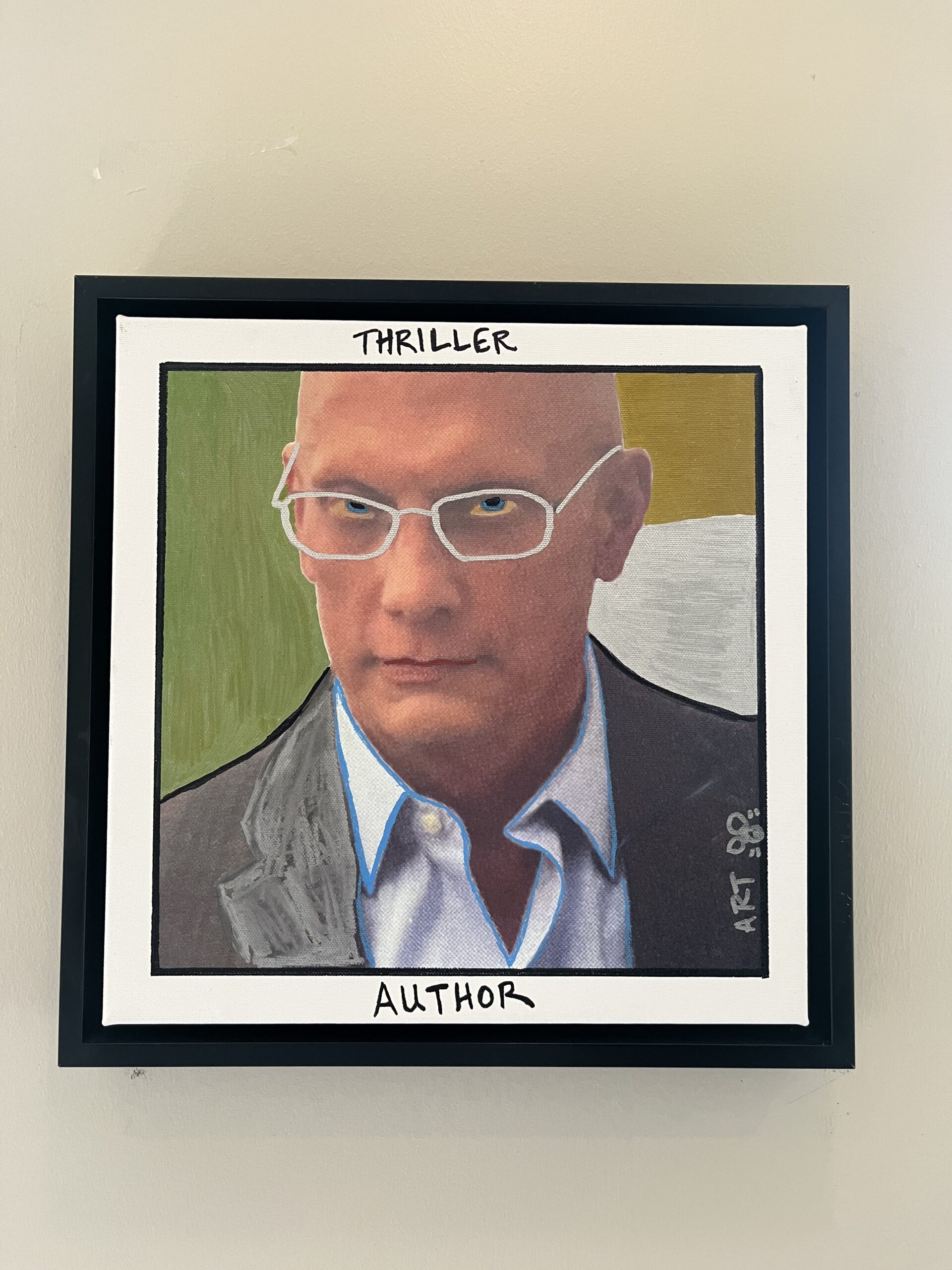
“I still think you need humans in the process,” said Higgins, a retired supervisory federal special agent and #1 Amazon bestselling author. He writes thrillers, short stories, scripts, creative nonfiction, and essays, and he has won The Claymore Award, PenCraft’s Best Fiction Book of 2022, and a Reader’s Favorite Gold Medal.
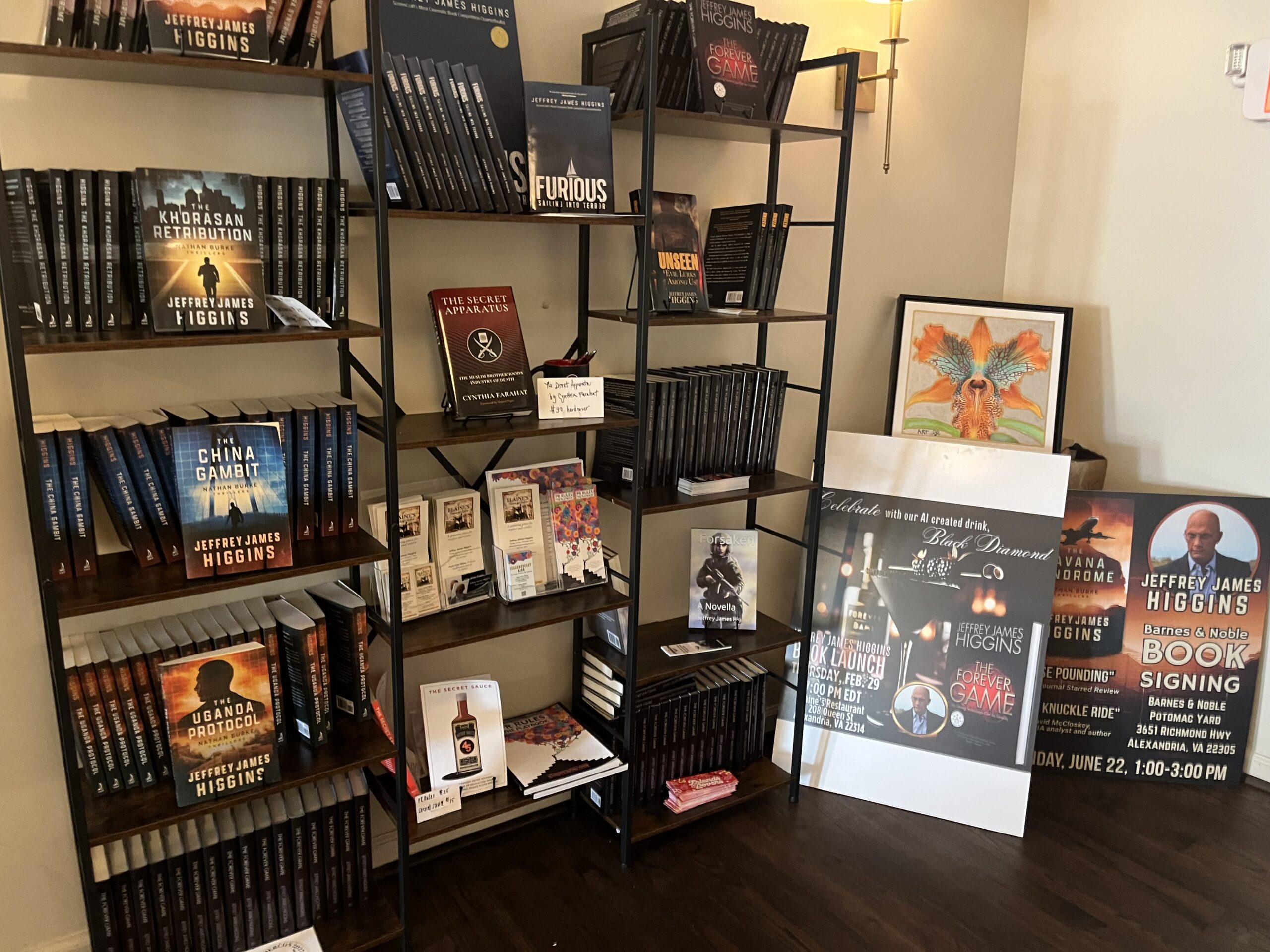
Higgins reports that he has written 15 books—seven “traditionally published” and eight remaining on his desktop. Severn River Publishing launched four books in his Nathan Burke international thriller series, and Library Journal selected The Havana Syndrome as one of the best books of 2025. Throughout his work, Higgins says his ideas are his own from start to finish—and that’s his creed.
“This is the kindergarten AI that we’re dealing with right now,” he said. One of his earlier novels, The Forever Game, explores the possibility of “another life form” and how something like AI could become a challenging problem in the future. He cautions novice and professional writers alike to resist leaning on AI for “originality.” Once writers consult AI for ideas, he said, some become slowly and incrementally more dependent on it.
“It will be a huge problem!” he said when asked about the likelihood of a “thinking” AI. Higgins, an active member of The Writers Guild, The Virginia Writers Club, and International Thriller Writers, points to the rapidly increasing number of books being published and self-published. He cited more than 3 million books in 2024 and 4 million in 2025, with 2026 numbers running higher.
“If you don’t use that gift of human creativity and imagination, you’re shutting down your creativity,” he warned, adding that it won’t be long before AI will “hit that inflection point and AI will move beyond human understanding.” He points to chess engines as an everyday example of technology already surpassing human capabilities in specific areas.
Higgins knows professional writers who use AI for routine tasks such as posters, promotion, editing, data collection, fact-checking, and manuscript evaluation. The concern begins when AI moves beyond those basics and becomes a creative partner.
“The problem will be, where do humans find satisfaction and happiness?” Higgins warned. “Its goals are not our goals,” he added, noting that humans approach goals from “a logical, moral, or ethical framework.” Not so with AI, he said, warning of a “sociopathic outcome—that is a threat.”
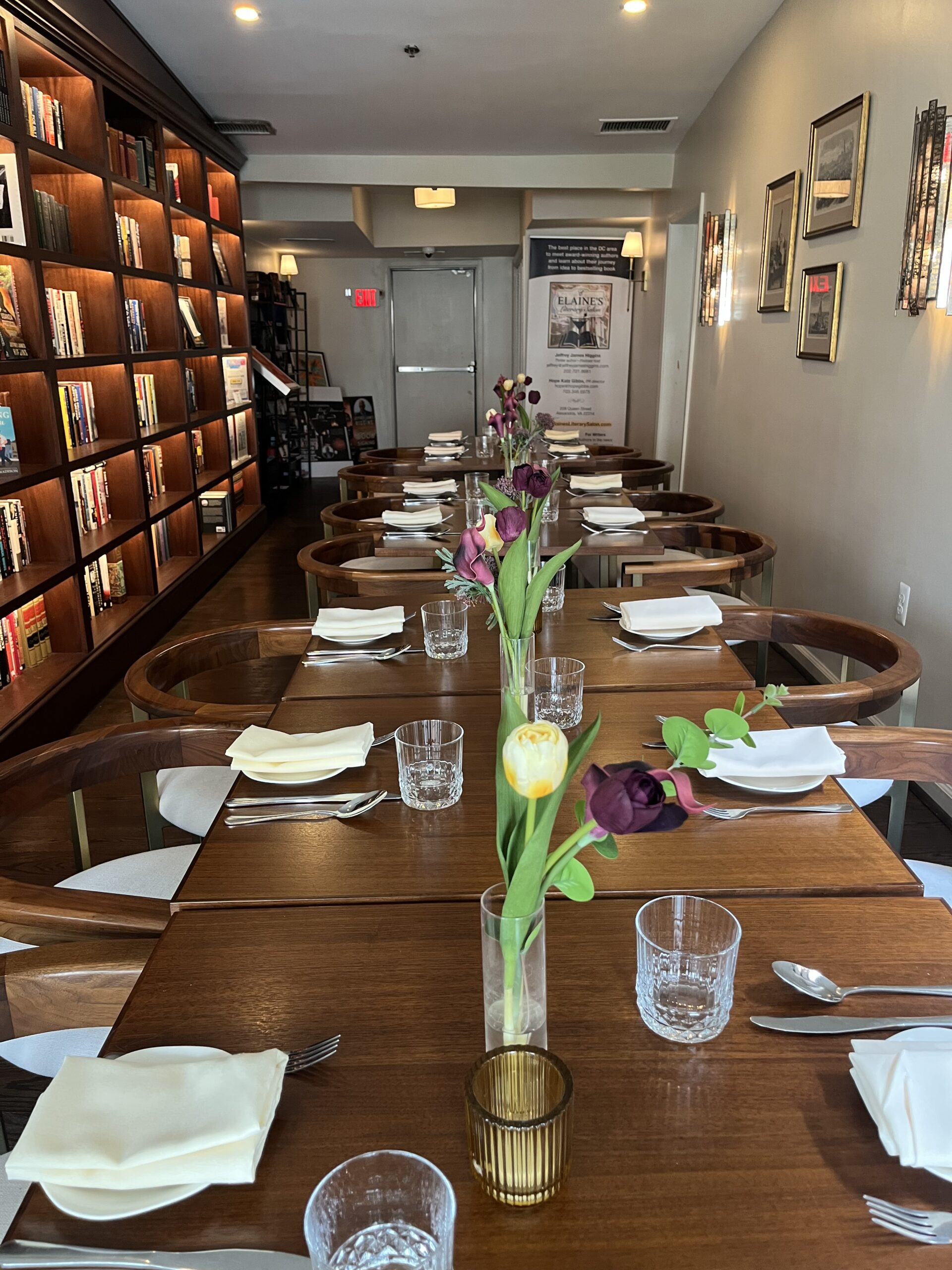
From his writing perch inside Elaine’s Restaurant at 208 Queen St., Higgins also operates Elaine’s Literary Salon, hosting writers for interviews, readings, book releases and other author events. Its podcasts reportedly reach 1.5 million people per month.
As an Author’s Guild ambassador for the D.C. area, Higgins is routinely reminded that AI is not unbiased. The challenge, he says, is ensuring that as AI becomes increasingly present in everyday life, humans don’t surrender the creativity and imagination that make their work—and themselves—uniquely human.


