
School-Sponsored Service Helps High Schoolers Support the Environment
Although “required volunteering” sounds counterintuitive, it can raise student awareness for need in their communities.

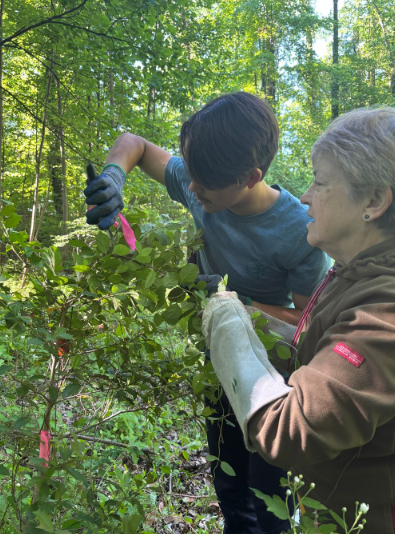
Alexandria, VA – One of my earliest memories of a school field trip is pulling weeds and planting flowers at Hidden Pond Park. My class of 50 excited kids raided the forest in search of trash, ripping out the roots of harmful plants with childish vigor. To our third-grade minds, serving at the park was just an extension on recess, a chance to have fun outside under the guise of “volunteering.”
I’ve gradually developed a more serious outlook on volunteer service. Immanuel Christian School, the private school I attend out in Springfield, requires volunteer hours for graduation: underclassmen must secure 10 hours a year, and upperclassmen have a slightly higher goal at 15. While 50 hours total—the bare minimum—isn’t an excessive burden by any means, students at my school have to think consciously and carefully about where hours come from and how different projects can contribute to the goal.
Most Alexandria private schools take a similar stance on mandatory volunteering, but public schools differ in their lack of concrete requirements. Instead of needing hours to graduate, public schools allow students easy access to service-based resources and encourage volunteer
involvement as a part of student life. Many clubs traditional to the high school experience have service at their core: Key Club, National Honor Society, and Interact Club, just to name a few.
Because of requirement or personal interest—or a combination of the two—most high schoolers in the Alexandria area participate in some form of volunteer service. Although students like me volunteer to lend our strengths to the programs we work for, in return, we receive precious insights into issues relevant to the community. While working at a local park, I received a crash course on invasive species from the park service employees, who then taught us how to recognize the many variants that grow locally. Though I haven’t hiked into my backyard to pull weeds every day since, just knowing some simple facts about the nature surrounding us has opened my eyes to the many things we humans can do for the environment.
The volunteer requirement often feels like an unnecessary hassle during the grind of the school year. But looking back, I can appreciate how high school encouraged me and so many other students to become proactive about community issues, developing our awareness about areas in need and feeling empowered to turn awareness into action.

Kylie Harris is a rising senior at Immanuel Christian School. After high school, she plans to attend a four-year university, likely majoring in English with a focus on international journalism and storytelling.


