
Perseids Meteor Shower 2026: Where to Watch in Alexandria, VA
NOVAC VP Paul Derby on Where—and When—to Watch the Perseids Around Alexandria


Alexandria, VA- There is nothing more human than to stare up into the vastness of our universe and marvel at its magic and our own relative insignificance.
From Pagans, to Catholics, to Pop Culture devotees, inspiration has been found in the awesomeness of the Perseids meteor shower.
John Denver’s song “Rocky Mountain High” was inspired in part by watching the Perseids, and there has got to be a new Taylor Swift reference somewhere.
If you are as of yet unfamiliar with the Perseids, they are an annual meteor shower best known for the large number of meteors seen streaking through the sky, often with bright trails of light following in their wake.
The Perseids are technically created by the trail of debris left behind by Comet 109P/Swift–Tuttle, which Earth’s orbit crosses every year between late July and late August.
Comet Swift-Tuttle was discovered independently by two astronomers, Lewis Swift on July 16, 1862, and Horace Parnell Tuttle on July 19, 1862. Fun fact: it takes Swift-Tuttle 133 years to orbit the Sun.
This year, peak viewing time is expected to be during the night of August 12th into the pre-dawn hours of August 13th, and it is hyped to be especially good because it coincides with the August New Moon. Friendly reminder: the New Moon is when the moon sits directly between the Earth and the Sun, making the night sky especially dark and the stars and meteors feel especially bright in contrast.

NOVAC, the Northern Virginia Astronomy Club, takes members and participants far out of town to Spruce Knob Mountain in West Virginia for minimal light pollution and their annual Almost Heaven Star Party, August 10–August 16.
I had a chance to ask NOVAC VP Paul Derby, “What should someone watching the Perseids from Alexandria expect to see this year, and where would you recommend they look from given our light pollution?”
The man who believes in “Astronomy for Everyone” and has done so much to coordinate NOVAC’s Sky Meadows State Park astronomy outreach (you can get an August 15th Ticket on Eventbrite) had this to say:
“This is a great year for watching the Perseids meteor shower that will peak the night of August 12 and 13, 2026. The peak takes place on a new moon (Aug 12), so there’s no moonlight washing things out. This year will be one of the best moon conditions for this shower in years. Under dark skies you could see from 60 to 100 meteors/hour at peak, though from anywhere near the city lights you’ll see well under that. Best viewing window is roughly 11 p.m. to dawn, with rates climbing after midnight and peaking highest in the pre-dawn hours in the northeast sky.
Since Alexandria itself sits under significant DC-metro light pollution, the faint meteors get washed out and you’ll mainly catch the brighter ones. A few options, roughly by travel effort:
Closest, minimal drive: Pohick Bay Regional Park, south of Alexandria along the Potomac. This area has reasonably open sky and is darker than in the city. Convenient if you don’t want to travel far.
Better viewing with a 30 to 40 minute drive: Turner Farm Park in Great Falls, which is regarded as one of the darkest spots within 30 miles of DC.
Worth the drive for real dark skies: Sky Meadows State Park (Delaplane, about 1 hr) west is an officially designated International Dark Sky Park. The Turner Pond area of the park is open until 2 a.m. for public viewing. Check with the park to see if they extend the hours this year. This is likely your best bet for a genuinely impressive show, with Shenandoah National Park as an even darker location about a half hour further west.
Practical tips: get away from streetlights, face northeast-ish but really just take in as much open sky as possible, give your eyes 20–30 minutes to adjust, and skip the telescope. Meteors are a great naked-eye, wide-field event.”
These are some excellent tips from Derby, especially if you are easily mobile.
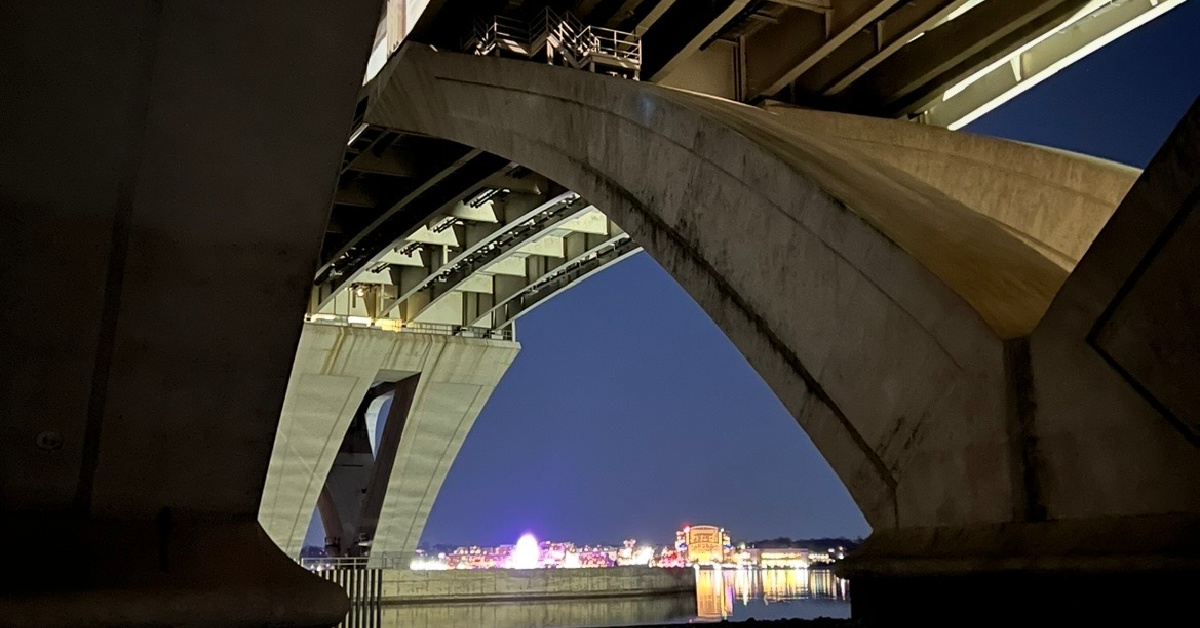
These ones were recommended by him, but you want a little more convenience, Jones Point in South Old Town is an easy spot, as are a few of the pull-offs along the Potomac River en route to Mount Vernon.
So go wish on a star, and remember: in a universe this awesome, you can never be truly alone.


