Mothers, Daughters, and Friends Invited to Alexandria’s EmpowerHER Women’s Health Forum
Free International Women’s Day event will bring women together for health insights, wellness activities, and community connection

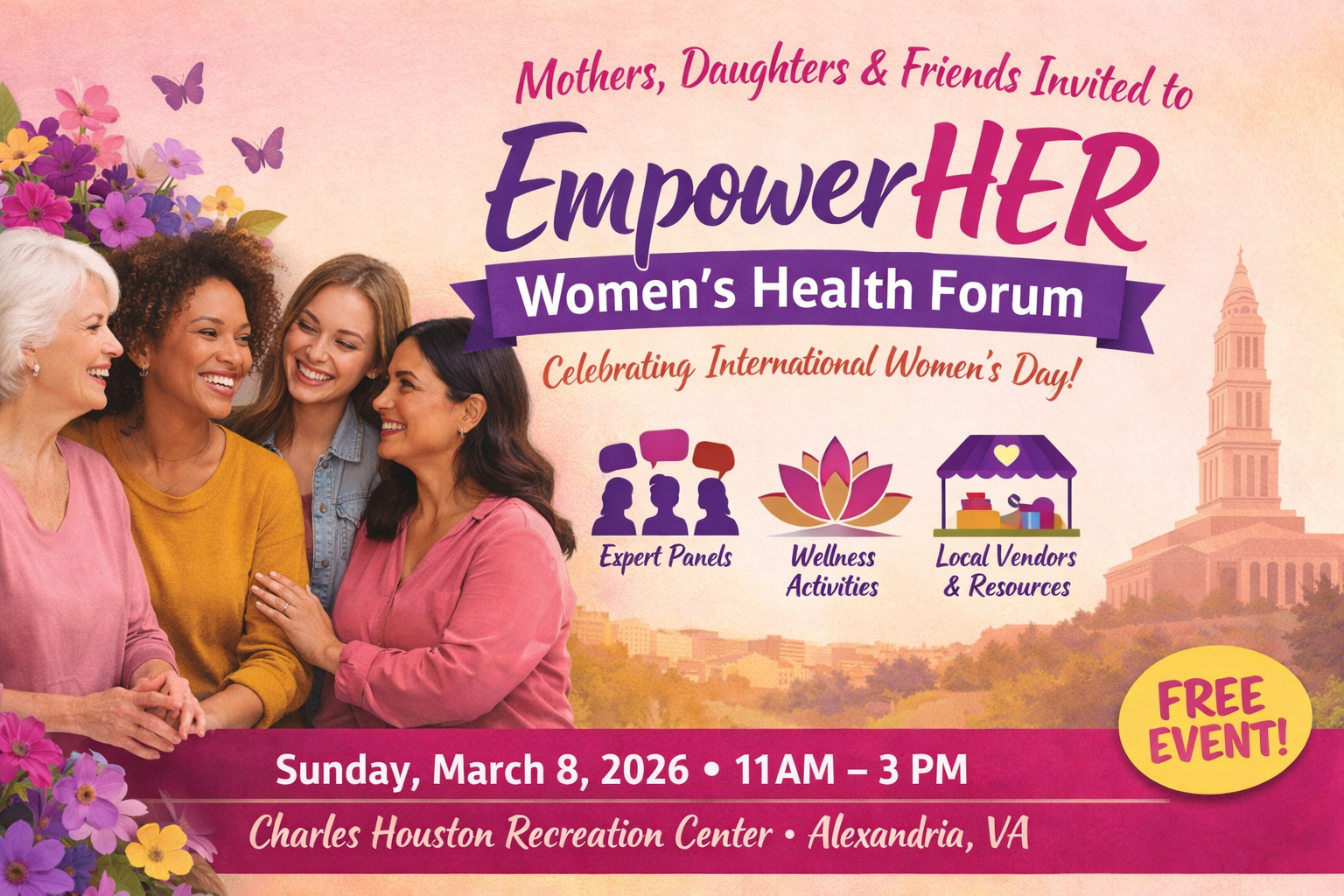
ALEXANDRIA, VA — Women across Alexandria are invited to spend part of International Women’s Day together at the EmpowerHER Women’s Health Forum, a welcoming community gathering focused on education, wellness, and support for women at every stage of life.
The event will take place Sunday, March 8, 2026, from 11 a.m. to 3 p.m. at the Charles Houston Recreation Center in Alexandria.
Hosted by Alexandria City Councilwoman Jacinta Greene, Alexandria Celebrates Women, and the Ivy Foundation of Northern Virginia, the forum is designed to create a space where women can learn from experts, connect with one another, and explore ways to support their health and well-being.
Organizers hope the event will feel both informative and uplifting, offering women practical tools and conversations about the health topics that matter most.
Guests will find a variety of activities and opportunities throughout the afternoon, including panel discussions with professionals on subjects such as intergenerational health, mental wellness, and sexual and reproductive health. Local vendors and community organizations will also be on hand sharing resources and information designed to help women live healthier, more balanced lives.
In addition, attendees can participate in wellness activities meant to promote both physical and mental renewal.
The forum is free and open to women of all ages and backgrounds. Organizers especially encourage women to come together across generations — mothers, daughters, grandmothers, and friends — to share the experience and learn about the health milestones that shape each stage of life.
International Women’s Day is a time to celebrate strength, resilience, and community. Organizers say the EmpowerHER forum is meant to reflect that spirit — a place where Alexandria women can gather, learn from one another, and leave feeling supported, informed, and inspired.
And in true Alexandria fashion, it’s also an opportunity to connect with neighbors. Bring a friend, bring your mom, bring your daughter — and spend a few hours focusing on health, conversation, and the power of women supporting women.
Event Details
What: EmpowerHER Women’s Health Forum
When: Sunday, March 8, 2026 | 11:00 AM – 3:00 PM
Where: Charles Houston Recreation Center
901 Wythe Street, Alexandria, VA
Registration: Attendees are encouraged to register in advance. Participants can scan the QR code on the official event flyer or register online here:
https://app.smartsheet.com/b/form/b7bffbb4837c48f2b388b0faaee27eaa