PHOTOS: Potomac River’s Health Rebounds, but Swimmers Beware
Potomac Conservancy Gives River a Grade of “B”


Washington, DC – Despite decades of cleanup, the Potomac is stuck at a “B” – still too polluted for safe swimming and fishing. That’s what Hedrick Belin, executive director of the Potomac Conservancy revealed to a gathering of reporters this morning (Wednesday November 12) at DC Wharf.
“It certainly is a big turnaround from the dismal D that it received in 2011, but it also means that progress is stalled. Now, it’s important because our River supplies drinking water to 5 million people, but that river still isn’t reliably safe for swimming or eating fish. It’s been a remarkable comeback, hard fought over decades to get to this point.”
Against a backdrop of Potomac River waters in the Washington Channel, Belin was joined on stage by other key river restoration figures at the Capital Yacht Club. The water lay before us, glistening, sparkling on an azure morning. But the river is hardly as healthy and vibrant as it looks.

“The biggest threat to the Potomac is urban polluted runoff, the dirty mix of street oil, fertilizers, sediment, and trash that flows off of our streets, lawns and parking lots,” Belin elaborated. “And it flows into all our streams that ultimately go into the Potomac. Forest loss and extreme climate conditions are also making this worse.”
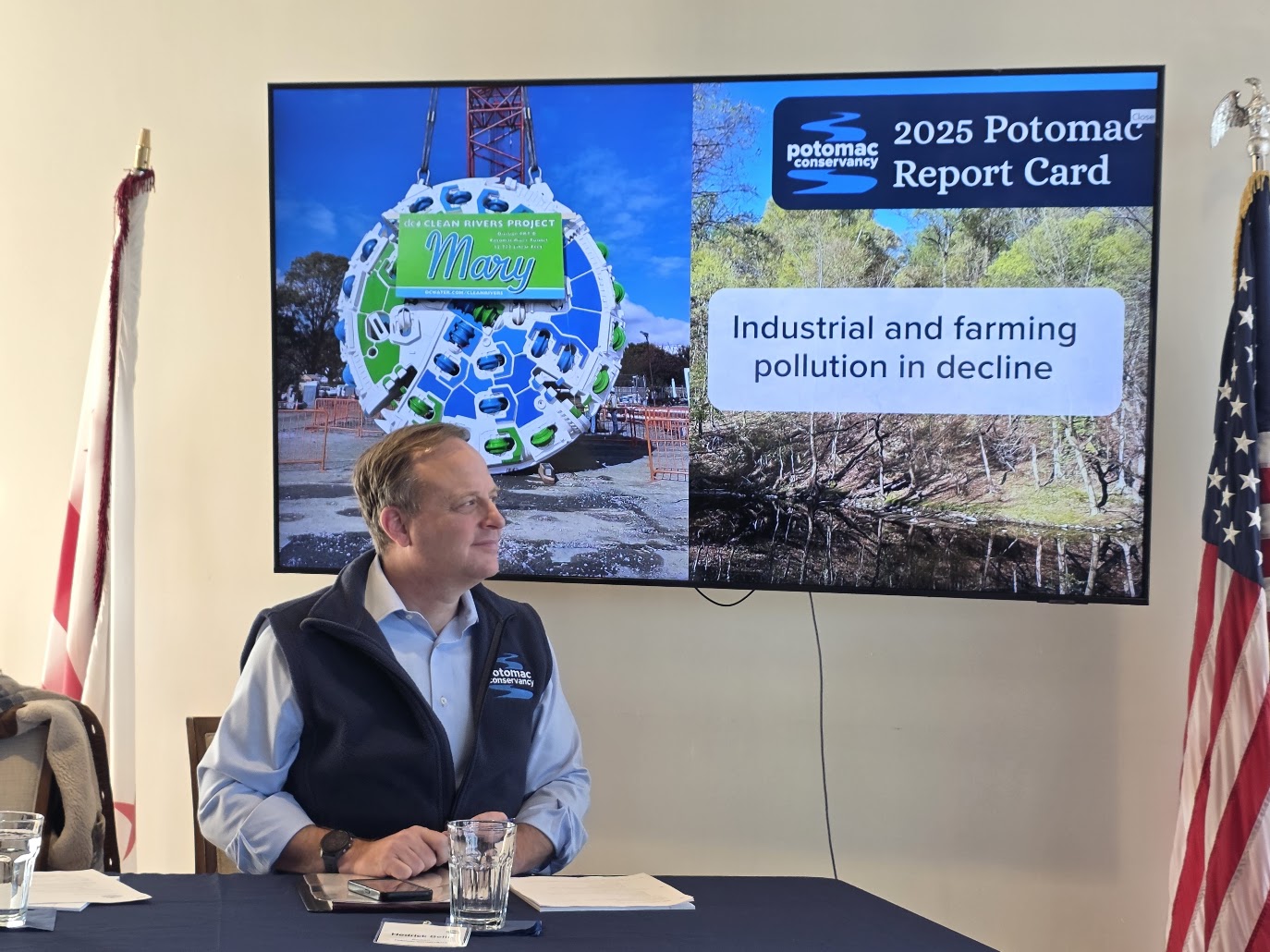
There is some good news. The Potomac River is undergoing an impressive comeback and is entering a pivotal decade in its restoration. According to the new 2025 Potomac River Report Card, outdoor recreation in the Potomac River region surged 10% since 2020, and major infrastructure improvements are tackling urban pollution. But the river’s future is now in question and setbacks threaten to upend decades of progress, preventing the Potomac’s return to a fully fishable and swimmable river.
The Potomac River is a central feature of Alexandria. The city sees a steady flow of visitors from the region and around the country who flock to the port city to stroll along its picturesque waterfront. One year ago, The Zebra met with Belin, just before he announced a major fundraising kickoff. Belin warned that without further progress, the river runs the risk of reaching the point of no return. At today’s news conference, The Zebra asked Belin if that danger still looms today.
We could lose ground,” Belin responded. “One of the challenges compared to several decades ago is the impact from climate change. We’re seeing more intense storms delivering much greater volume of rainfall. Achieving a healthy river is in no way a guarantee.”
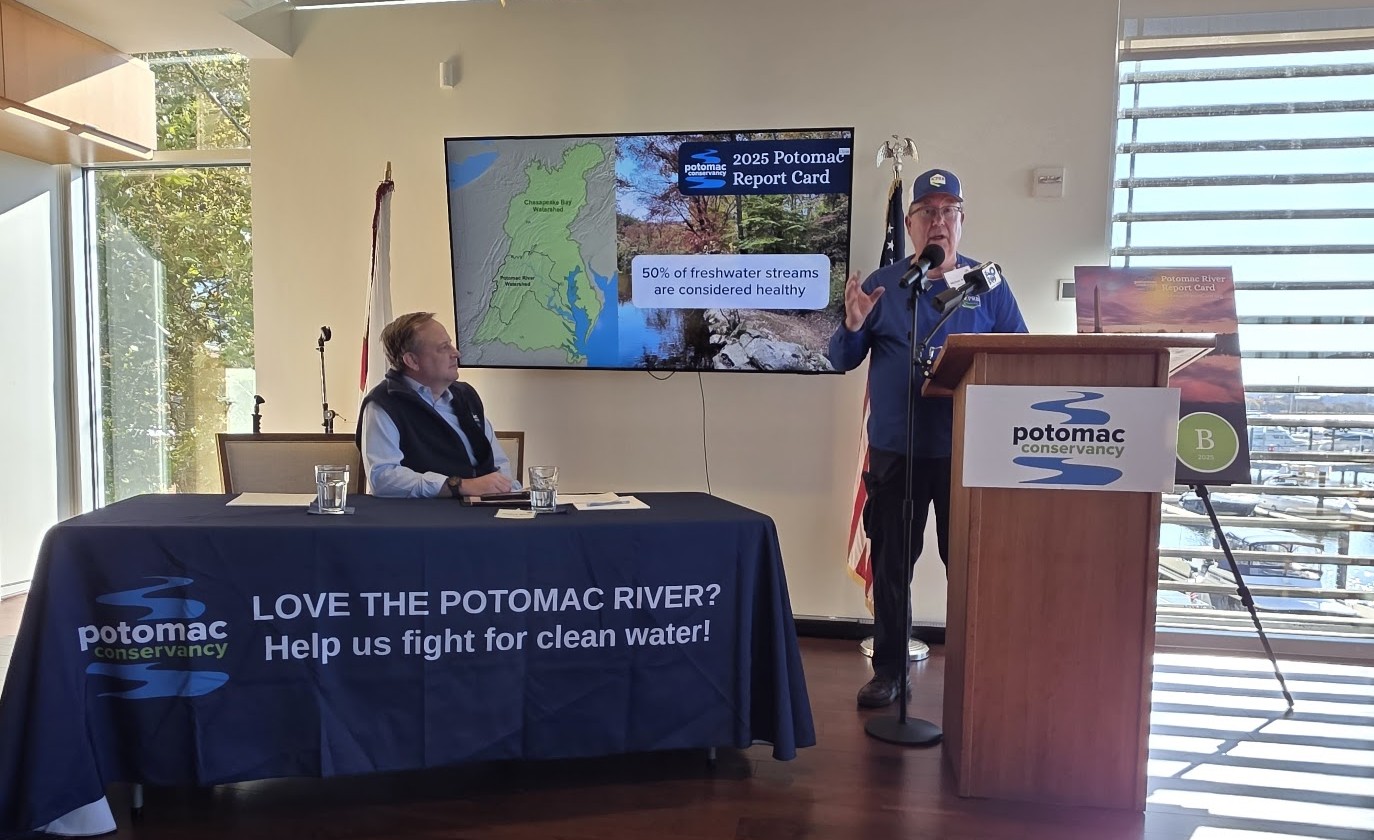
Just how large is the mighty Potomac?
“To give you an idea, the Potomac River watershed is about the size of Switzerland,” explained Mike Nardolilli, executive director of Interstate Commission on the Potomac River Basin. “It goes from Staunton in the south to Gettysburg in the north, Point Lookout in the east, and Fairfax Stone in the West. It provides about 25% of the fresh water that flows into the Chesapeake Bay.”
Belin praised Alexandria’s AlexRenew project, comparing it to what DC Water has done on its side of the river.
“Alex Renew captures polluted runoff before it goes into the creeks and streams. The revitalization of the Alexandria waterfront is going to draw more people to the city.”
Belin continued, “Not everyone has to swim in the Potomac. Not everyone has to fish, but it’s emblematic of a very healthy river. We want to try to be the first on the East Coast to be able to say that we’ve achieved official swimmable river.”
Aquil Abdullah is a US Olympic rower. A DC native, Abdullah stressed the importance of a healthy river.
“As the first African American male rower to represent the United States, clean water, access, and opportunity are very important to me.”
Abdullah relayed a story his aunt told him, about a little boy walking by the river. The child spotted Abdullah and asked his mom, “what’s that guy doing on the river?” And his parents replied, “rowing.”
“There’s a little kid that saw a black man rowing, and it sparked his imagination,” Abdullah recounted.
Abdullah told Zebra that he was nurtured by several Alexandria rowing greats.

“My goal is now to inspire those who have small dreams. I want to help them expand what it is they think they can accomplish by seeing that, hey, this guy did it and you know, I can do it!”

The 2025 Report Card is the fifth “B” level grade in a row. Potomac Conservancy hopes to raise $8 million for its Clean Water, Healthy Communities campaign. The fundraising push closes on December 31.

Potomac Conservancy is the region’s leading clean water advocate, fighting to ensure the Potomac River provides clean drinking water, healthy lands, and vibrant communities.
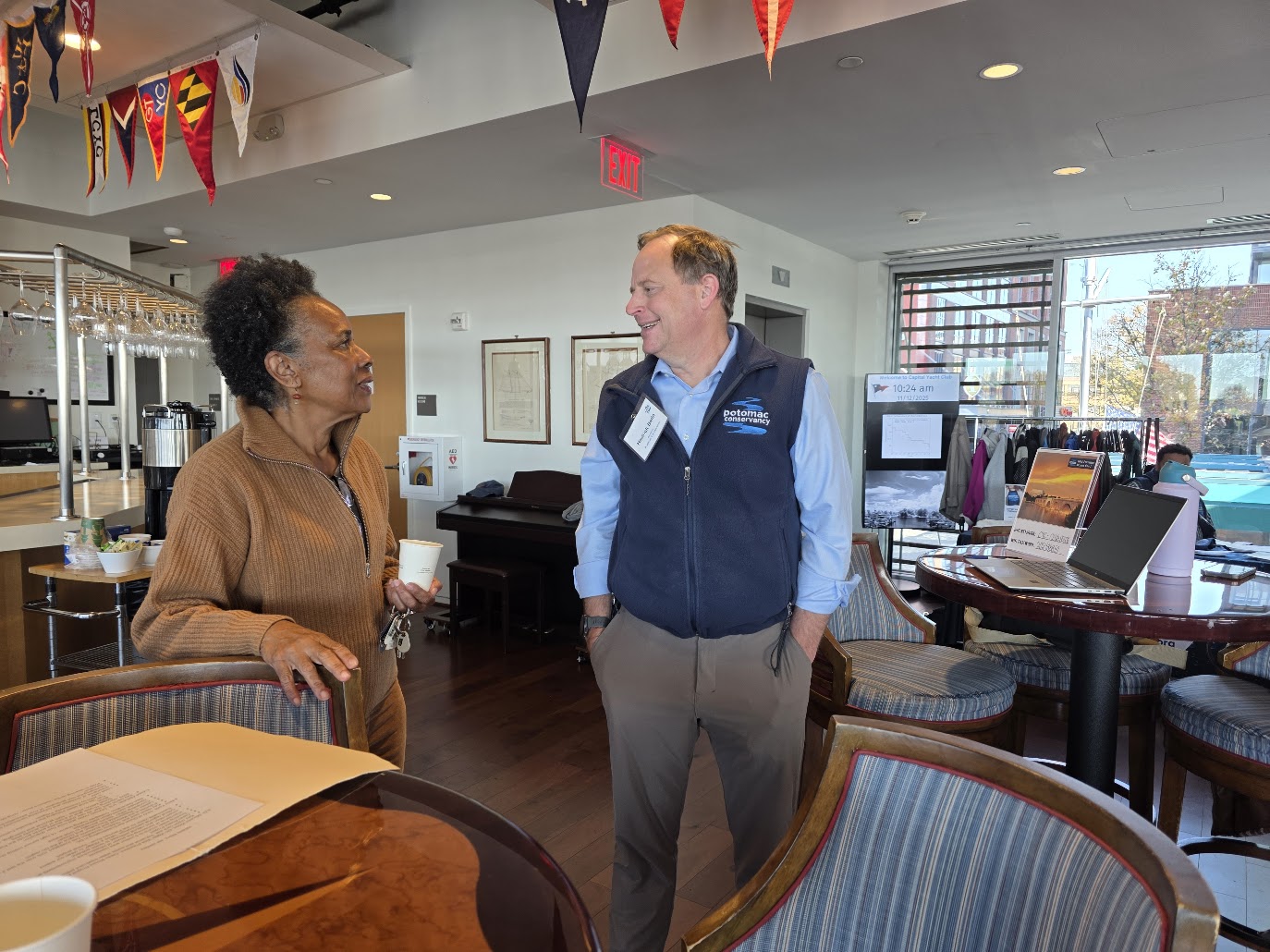
“That’s why this is the decisive decade,” Belin concluded.

Read also: Potomac Conservancy Announces Fundraising Push to Restore Potomac River