A Young Innovator is Bringing Alexandria’s History to Life Through Augmented Reality
Felix Trask and the Stabler-Leadbeater Apothecary Museum Where Curiosity Meets Technology

Alexandria, VA- There is still plenty of reason to be optimistic about the future.
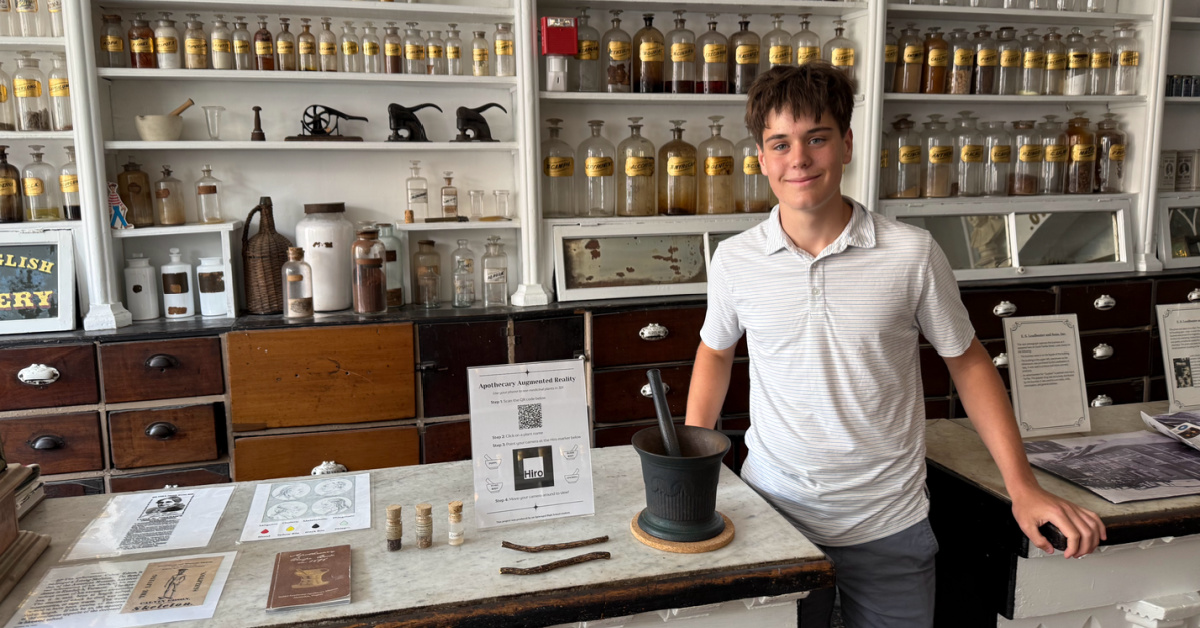
For Felix Trask, a rising junior at Episcopal High School in Alexandria, Virginia, curiosity and technology are already making a tangible impact on one of the city’s most treasured historical institutions.
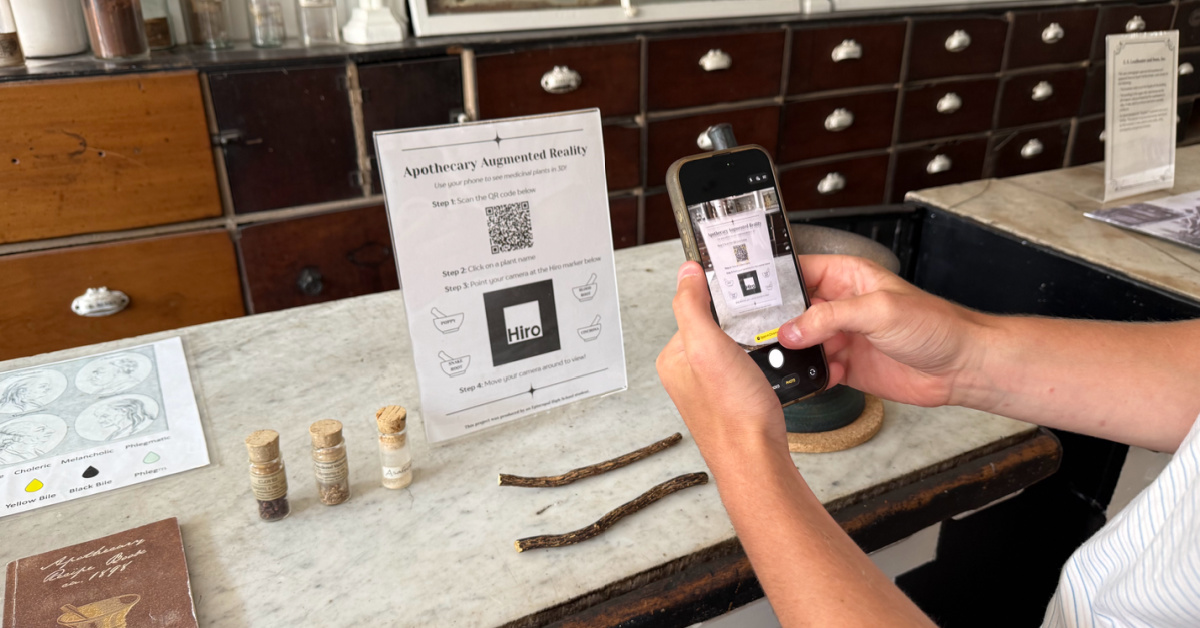
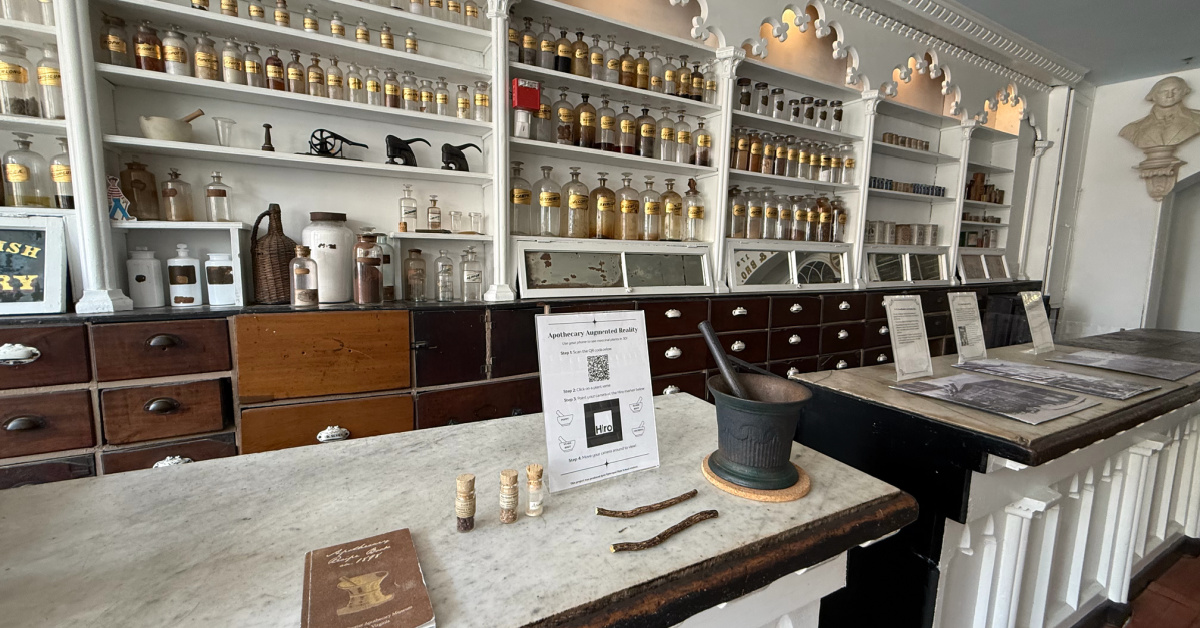
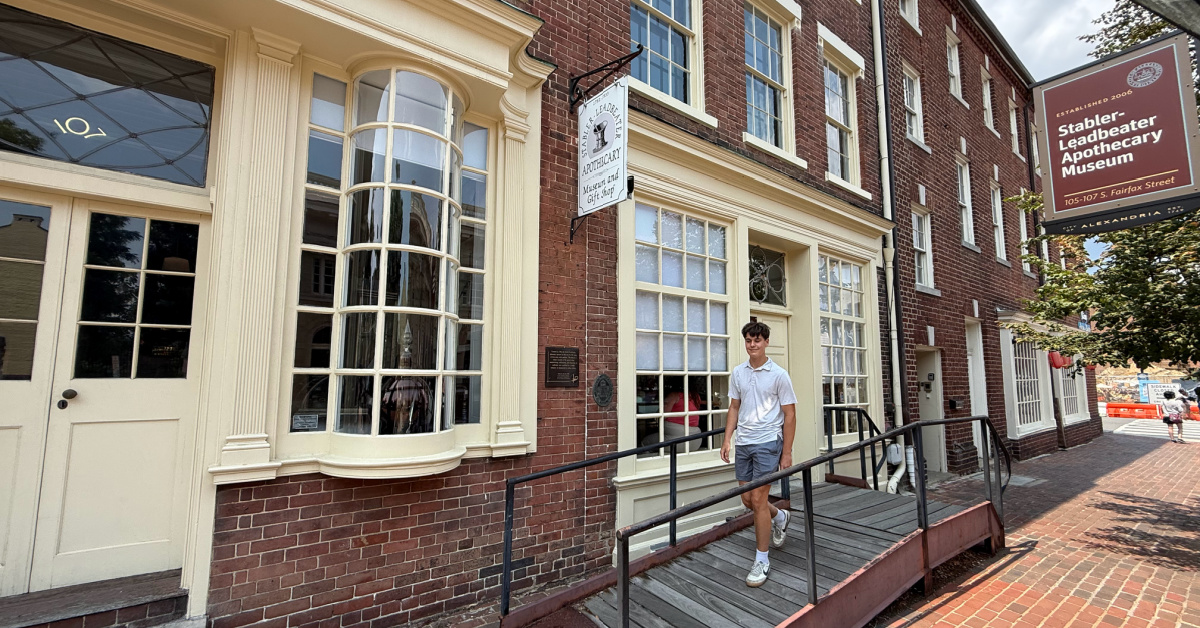
Earlier this month, Trask unveiled an augmented reality project for the Stabler-Leadbeater Apothecary Museum that allows visitors to interact with the museum’s collection in an entirely new way. By scanning a QR code, guests can view detailed three-dimensional models of medicinal plants, bringing them to life.
Inspired by His Seven-Year-Old Brother
The idea began not in a classroom, but during a family visit to the Apothecary Museum with his younger brother, Gus.
Like many curious seven-year-olds, Gus reached out to touch one of the museum’s fascinating objects and was quickly reminded not to. Rather than seeing the moment as a simple childhood mistake, Felix recognized a problem that technology could solve.
He proposed creating QR codes that would allow visitors to explore realistic 3D versions of the museum’s artifacts through augmented reality. He brought the idea to Ms. Michele Longo, Director of Education and Museum Operations for the Office of Historic Alexandria, and over the course of the past year, the two met regularly, spending several hours each week refining the project before its public launch this July.
“Ms. Longo took a chance on this project when it was just an idea from a high schooler. I’m really grateful she believed in my vision and saw it through with me.”

The Challenge Wasn’t Coding
Despite his age, Trask is no stranger to programming. He began coding at just six years old using Scratch before progressing to Python and more advanced programming languages.
Surprisingly, the most difficult aspect of the project wasn’t writing the code.
Instead, it was finding realistic three-dimensional models of the museum’s artifacts. When suitable models couldn’t be found, he created them himself in Blender, using AI tools for reference while doing the modeling, texturing, and shading by hand.
The result is an experience that feels both educational and intuitive, allowing visitors to examine delicate medicinal plants in ways that would otherwise be impossible.
“One thing that is really nice is that you do not need to download an app in advance. This was a strategic decision,” Trask says. “I wanted the experience to work for anyone who walked into the museum with a phone, without creating another barrier.”
Building Leaders Through Coding
Felix’s interest in technology extends well beyond this project.
As a freshman at Episcopal High School, he helped spark interest in creating a Coding Club. By his sophomore year, the organization had become official, and he was elected its president.
Before the school year concluded, the club had already begun developing an application for the Congressional App Challenge. Although Trask has spent the summer serving as a camp counselor at both Episcopal and New England Science & Sailing (NESS) in Stonington, Connecticut, he says the team plans to accelerate development of the app this fall.
While he prefers not to reveal proprietary details, I can say this much: the concept is thoughtful, humanitarian in focus, and addresses a genuinely meaningful problem.
Trask said, “I’m happy to share a little, but I’d rather hold back the specifics until we’re closer to launch since I don’t want to tip off any competitors. You could describe it as a proprietary app our club is developing to help combat food insecurity through grassroots community efforts. We’re ramping development back up in the fall. Hopefully it can launch publicly and make a real impact.”
Learning from Great Mentors
When asked about the people who have shaped him most, Trask spoke warmly about the influence of his parents and Episcopal faculty member Mr. Pratt.
“I’ve been incredibly fortunate to have parents like mine who’ve always encouraged me to pursue whatever I was curious about and who supported me from the first lines of code all the way to the final project. Mr. Pratt has also had a huge impact on me by constantly challenging me to think out of the box and tackle problems I wouldn’t have thought I could solve. They’ve all taught me that the best way to learn is simply to start building.”
Their encouragement has helped foster not only technical ability but also a mindset centered on curious creativity, and using technology to improve people’s lives.
Looking Toward the Future
Although college is still several years away, Trask is already considering a future in computer engineering or another STEM-related field.
Closer to home, he hopes his work at the Apothecary Museum is only the beginning.
He would love to see other Alexandria institutions—including Gadsby’s Tavern Museum and The Lyceum—embrace augmented reality to enrich the visitor experience. Looking even further ahead, he believes museums such as the Smithsonian could use similar technology to make history more immersive and accessible.
He also notes that he is open to future commissions for organizations interested in exploring augmented reality exhibitions.
A Reminder of What the Next Generation Can Build
It’s easy to hear conversations about artificial intelligence and emerging technologies framed in terms of uncertainty or disruption. Spending an afternoon with Felix Trask offered a different perspective.
Here is a young man who isn’t using technology simply because it’s impressive—he’s using it to solve real problems, preserve history, and make learning more engaging for others. That combination of technical skill, curiosity, and generosity is rare at any age.
If this project is an indication of what’s ahead, Alexandria—and perhaps far beyond—will be seeing much more of Felix Trask in the years to come.