Bridging Ground: A New Documentary Follows the Virginia Theological Seminary Reparations Program
An Alexandria friendship and Family History is at its Heart.


ALEXANDRIA, Va. — On Sept. 11, a documentary about the Virginia Theological Seminary reparations program will bring a deeply personal story to the screen.
“Bridging Ground” follows the seminary’s effort to confront its history of enslaved and exploited Black labor. The film also examines what happened after the institution moved beyond acknowledgment and began making direct financial payments to descendants.
The seminary has established a $2.8 million reparations endowment. More than 200 verified descendants now receive annual payments.
For filmmaker and Alexandria native Mark Farkas, the story is personal. His lifelong friendship with Pastor Elwood Jones helped him connect with the seminary’s hidden history. Ebonee Davis-Hayes, the seminary’s Director of Reparations, helped bring that history and its descendants into focus.
Together, their stories form the heart of “Bridging Ground.”
A History Hidden Behind a Brick Wall
Virginia Theological Seminary was founded in 1823. Enslaved people helped build and sustain the campus. They cleared timber, made bricks, worked agricultural plots, and prepared meals for white faculty and students.

The end of slavery did not end the unequal treatment of Black workers.
During the Jim Crow era, VTS continued to employ Black staff under segregated and low-wage arrangements. Farkas describes that period as “a form of slavery by another name.”
Those practices limited economic opportunity for Black families for generations.
In 1951, the seminary admitted the Rev. John T. Walker, its first African American student. Walker later became Bishop of Washington.
That admission marked an important change. Yet the institution’s history of exploited labor remained largely unexamined.
By 2019, VTS leaders began confronting that history more directly. They recognized that the labor of Black workers had helped build the institution, even as their families were denied the opportunity to build generational wealth.
The question became what genuine reparations should look like.
How the Virginia Theological Seminary Reparations Program Began
On Sept. 5, 2019, VTS Dean and President the Very Rev. Ian S. Markham, Ph.D., announced an initial $1.7 million reparations endowment.
The program took a different approach from traditional institutional apologies or scholarship programs. It prioritized direct, unconditional payments to living descendants.
The seminary then began searching its archives for evidence of the people whose labor had helped sustain the campus.

Director of Reparations Ebonee Davis-Hayes worked with historian Maddy McCoy on an extensive genealogical investigation. The team examined slave ledgers, census records, tax documents, and quartermaster ledgers.
Their research identified ancestral connections to workers such as Carter Dowling and Wallace Wanzer.
In February 2021, the seminary made its first annual payments. Each verified direct descendant received $2,100.
The reparations endowment has since grown through donor contributions and investment gains. By June 2025, it had reached $2.8 million and supported more than 200 descendants.
The program has also expanded beyond financial payments. VTS established community Covenants with historic Black churches, including Oakland Baptist Church and Meade Memorial Episcopal Church.
The seminary also broke ground on a permanent memorial honoring more than 545 documented Black workers.
Among those connected to the program is Pastor Elwood Jones.
A Childhood Friendship Uncovers a Family History
Jones and Farkas met in second grade.
Their friendship began in Alexandria and lasted through the decades. Jones grew up in poverty, while Farkas often spent time at his friend’s home playing basketball and pool.
On weekends, the boys sometimes visited NBC, where Farkas’s father worked as a producer covering the Civil Rights Movement.
“We just formed a relationship from second grade on,” Farkas said.
That friendship eventually helped uncover a piece of Jones’s family history that neither man knew.
Years later, Farkas became involved with the Alexandria Community Remembrance Project. There he met historian Maddie McCoy.
While covering an NAACP dinner for Zebra Press, Farkas also saw Davis-Hayes receive recognition for her work with the reparations program.
He immediately thought of Jones.
Farkas encouraged his childhood friend to research his family history and investigate whether his ancestors had connections to the seminary.
Jones did.
The research revealed that his ancestors had worked at VTS. Their names appeared in historical records.
Jones contacted the seminary to determine whether his family qualified for the reparations program.
He did.
Today, Jones is both a descendant shareholder and the seminary’s Dean’s Advisor for Community Engagement.
His discovery gave Farkas a personal connection to the documentary that went far beyond his work as a filmmaker.
Ebonee Davis-Hayes Puts People at the Center
For Davis-Hayes, reparations are not simply about records, money or institutional policy.
They are about people.
Farkas calls her “the star of the film.”
Davis-Hayes speaks plainly about what she believes reparations should mean.
“Reparations must be direct, unconditional cash disbursements,” she said.
Davis-Hayes grew up in Prince George’s County, Maryland, and has lived in Washington, D.C., for 15 years. Her family has roots in North Carolina.
Her grandmother migrated north during the Great Migration and lived to be 101.
That family history influences how Davis-Hayes approaches her work.
“My grandmother is my guidance for running this program,” she said.
She does not expect every descendant to respond to reparations in the same way. Instead, she gives families room to decide how they want to participate.
One question guides her approach: If her grandmother were a descendant, how would she want to be treated?
That perspective shapes the way Davis-Hayes works with families.
She approaches each relationship with four essential gifts: grace, space, time and care.
Turning Archival Records Into a Documentary
“Bridging Ground” explores the history behind the Virginia Theological Seminary reparations program and the people whose lives are connected to it.
Director Roan Ross is the director of the film, while Farkas serves as producer. Jones created the original musical score, and Davis-Hayes appears as a central figure in the story.

The film looks beyond the mechanics of financial reparations.
It explores family history, faith, friendship, and the process of uncovering records that many descendants never knew existed.
The seminary’s archives contain records dating from 1823 through 1951. Researchers found original slave ledgers and other documents that helped establish family connections.
For Farkas, the research sometimes felt like detective work.
“It’s almost like a detective story,” he said.
The documentary also examines what happened after VTS launched its reparations program in 2019.
The institution did not stop with an acknowledgment of its past. It created a financial program, expanded historical research and developed educational and community initiatives.

Those efforts have drawn attention from universities, religious organizations, and policy experts studying institutional responses to slavery and racial exploitation.
A National Story Rooted in Alexandria
Farkas’s connection to Virginia Theological Seminary began long before he became a documentary producer.
He grew up less than a mile from the seminary. He attended Alexandria Public Schools through 12th grade and celebrated his bar mitzvah at Temple Beth El.
As a child, he frequently passed the seminary.
A brick wall once blocked much of the campus from view.
“I knew something was going on there, but I didn’t know what,” Farkas recalled.
That wall is now gone.
For Farkas, the change carries symbolic weight. A place that once concealed part of Alexandria’s history is now at the center of a national conversation about how institutions confront the past.

He sees Alexandria as a city filled with that same tension.
“It’s George Washington’s city where we celebrate his founding ideals while facing its history of slavery, exploitation, and segregation,” he said.
A National Conversation Begins in Alexandria
The story of Virginia Theological Seminary’s reparations program reaches far beyond the campus.
Across the country, universities and religious institutions are examining their historical connections to slavery and racial discrimination. The VTS program offers one example of what can happen when an institution moves from acknowledgment to direct financial reparations.
For Davis-Hayes, however, the work remains personal.
The descendants are not simply names in archival documents. They are families whose histories connect them to the institution.
For Jones, the program transformed an unknown part of his family history into something he could see and understand.
For Farkas, the project brought together his childhood, his hometown and his work as a filmmaker.
“It’s a labor of love and friendship and community,” Farkas said.
The documentary “Bridging Ground” will premiere on Sept. 11 at Virginia Theological Seminary, bringing national attention to its reparations program.
The premiere marks another chapter in a story that began with archival records and painful history.
It also raises a larger question: What do meaningful reparations look like when an institution decides to confront oppressed people and families connected to its past?
For Farkas, the answer begins with telling the story.
“This is an amazing story,” he said. “It’s an important story.”
Documentary Spotlight: ‘Bridging Ground’
Bridging Ground is an upcoming documentary produced and directed by veteran filmmaker Mark Farkas (known for his long-time work producing historical and public affairs documentaries for C-SPAN).
The documentary focuses on the Virginia Theological Seminary (VTS) Reparations Program, chronicling the history of forced and underpaid Black labor on campus, the genealogical work to trace living descendants (“shareholders”), and the personal stories of those receiving reparations.
- Production Status: Mark Farkas officially presented an overview of the documentary and outlined release plans during a VTS Quarterly Reparations Shareholders Meeting.
- Premiere & Release Info: An official public release date to the VTS and descendants, the reparation recipients, is September 11 at the Seminary. The official broadcast premiere has not yet been announced. Distribution plans and preview screenings are being coordinated in close consultation with VTS, program director Ebonee Davis-Hayes, and descendant community members.
Honoring a Legacy: The VTS Descendants Gala
In 2019, Virginia Theological Seminary (VTS) launched a landmark Reparations Program—supported by a $2.8 million endowment—to repair relationships with descendants of the enslaved and Black laborers who built and maintained the institution from 1823 to 1951.
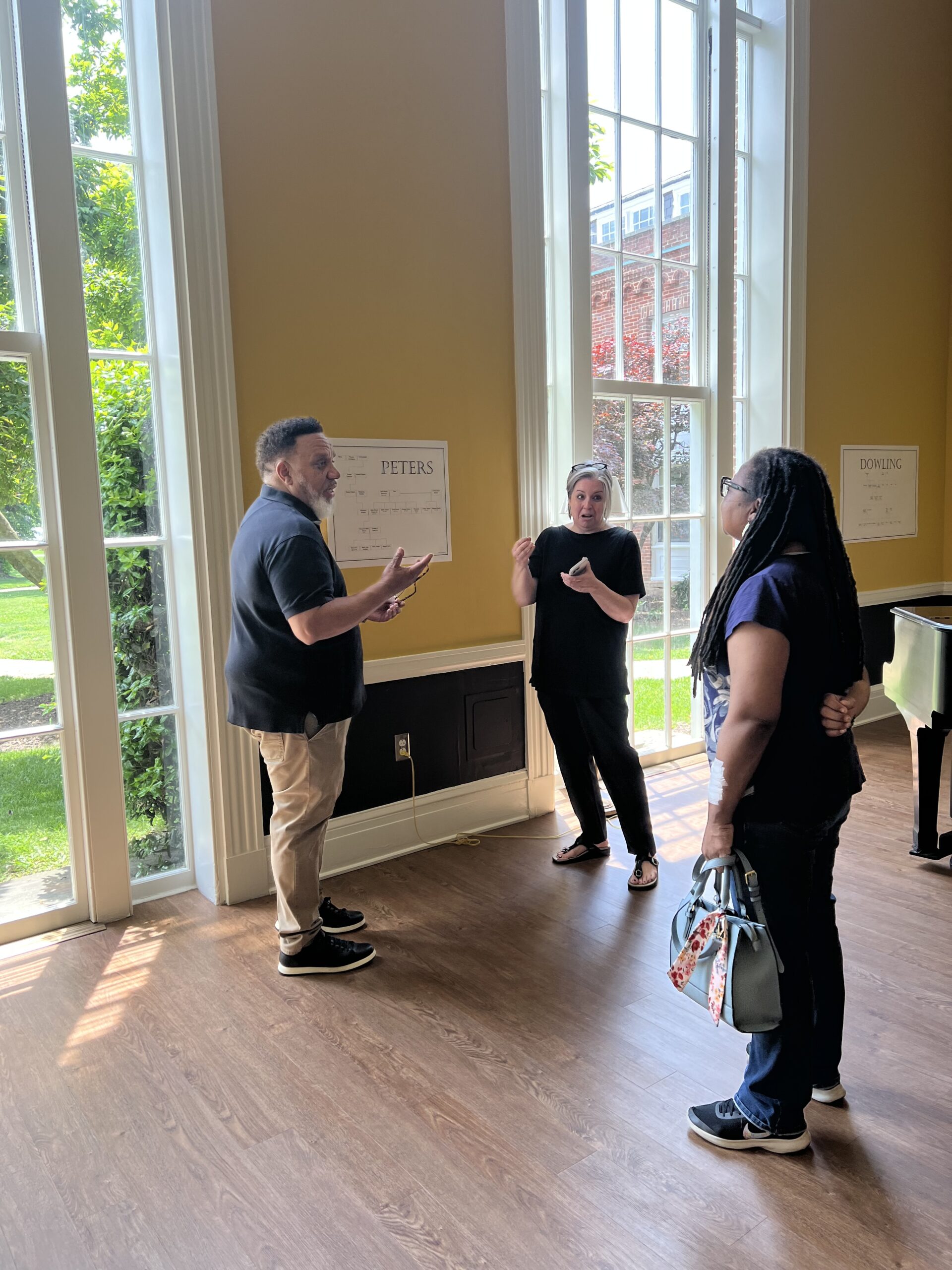
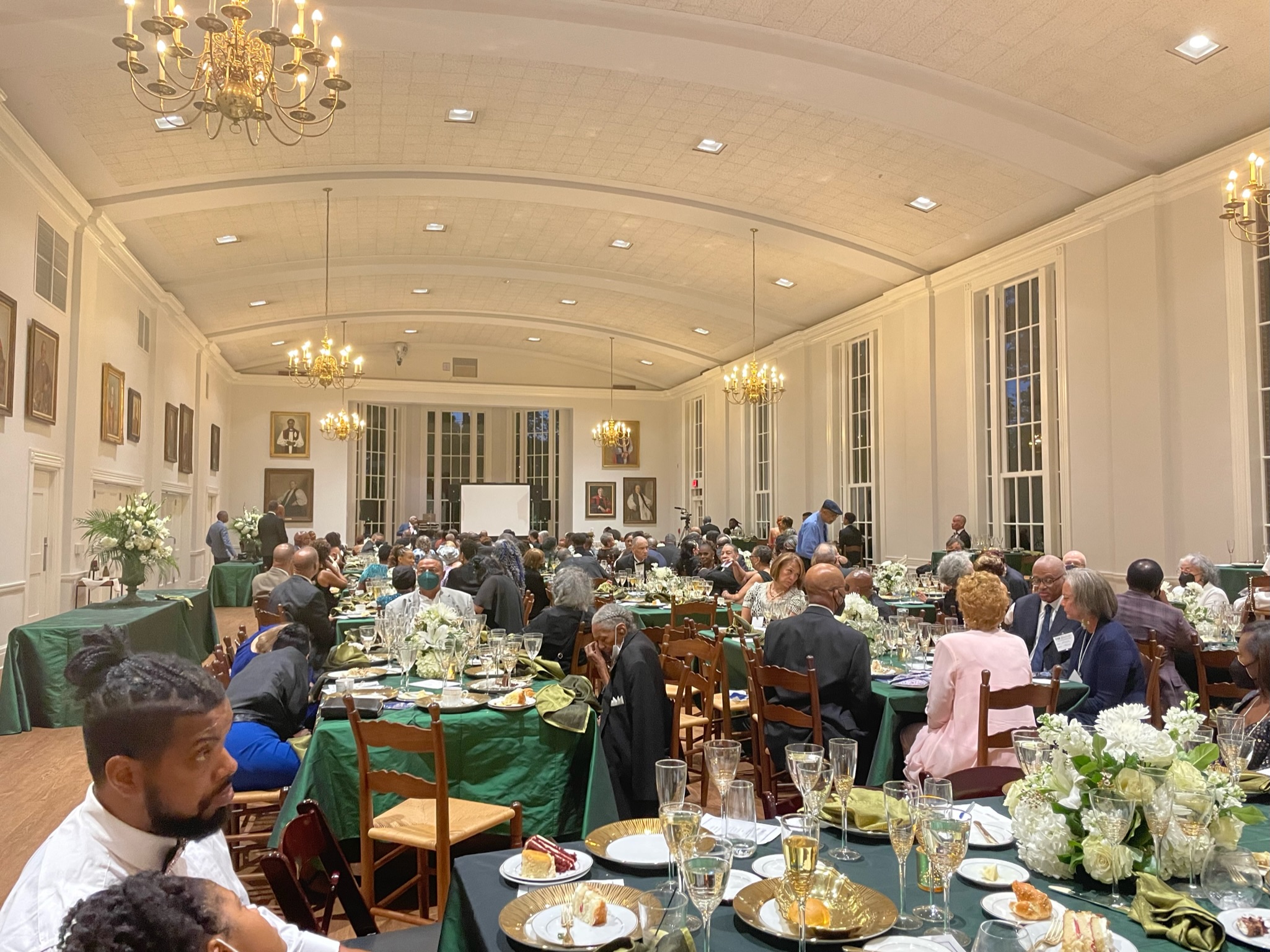
A central pillar of this effort is the Descendants Gala. Organized by the Office of Multicultural Ministries, the annual gathering honors these direct descendants—recognized by VTS as “shareholders”—with an evening of music, fellowship, and truth-telling. Beyond the celebration, the weekend serves as a historic reunion featuring family trees, genealogical displays, and campus walking tours tracing ancestral roots.

Working alongside annual cash payments, the gala fosters deep community repair. At this year’s September 11 film premiere, shareholders take center stage as guests of honor for the screening of Bridging Ground. As Ebonee Davis-Hayes emphasizes, “It’s their story, and it’s their family story.”
Documentary Spotlight: ‘Bridging Ground’
Bridging Ground is an upcoming documentary produced and directed by veteran filmmaker Mark Farkas (known for his long-time work producing historical and public affairs documentaries for C-SPAN).
The documentary focuses on the Virginia Theological Seminary (VTS) Reparations Program, chronicling the history of forced and underpaid Black labor on campus, the genealogical work to trace living descendants (“shareholders”), and the personal stories of those receiving reparations.
- Production Status: Mark Farkas officially presented an overview of the documentary and outlined release plans during a VTS Quarterly Reparations Shareholders Meeting.
- Premiere & Release Info: An official public release date to the VTS and descendants, the reparation recipients, is September 11 at the Seminary. The official broadcast premiere has not yet been announced. Distribution plans and preview screenings are being coordinated in close consultation with VTS, program director Ebonee Davis-Hayes, and descendant community members.
Honoring a Legacy: The VTS Descendants Gala
In 2019, Virginia Theological Seminary (VTS) launched a landmark Reparations Program—supported by a $2.8 million endowment—to repair relationships with descendants of the enslaved and Black laborers who built and maintained the institution from 1823 to 1951.
A central pillar of this effort is the Descendants Gala. Organized by the Office of Multicultural Ministries, the annual gathering honors these direct descendants—recognized by VTS as “shareholders”—with an evening of music, fellowship, and truth-telling. Beyond the celebration, the weekend serves as a historic reunion featuring family trees, genealogical displays, and campus walking tours tracing ancestral roots.
Working alongside annual cash payments, the gala fosters deep community repair. At this year’s September 11 film premiere, shareholders take center stage as guests of honor for the screening of Bridging Ground. As Ebonee Davis-Hayes emphasizes, “It’s their story, and it’s their family story.”
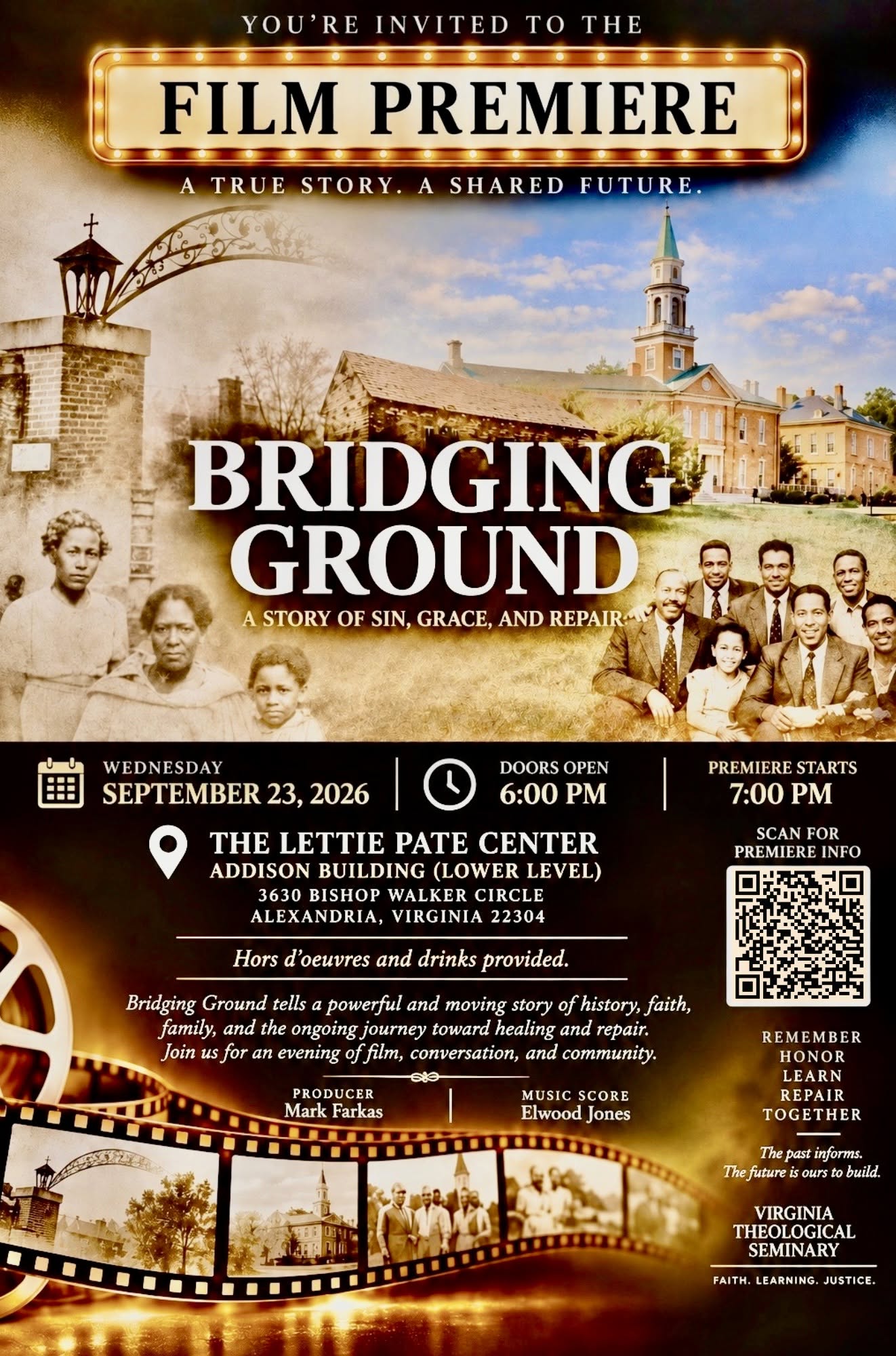
A public premiere is scheduled at the The Lettie Pate Center at Virginia Theological Seminary on September 23. The registration link is above in the QR code, and here.