Alexandria, Who’s on the Phone?
At the Billington CyberSecurity Summit, a simple phone call raised a much bigger question: In the age of AI, how do we know who’s really on the other end?

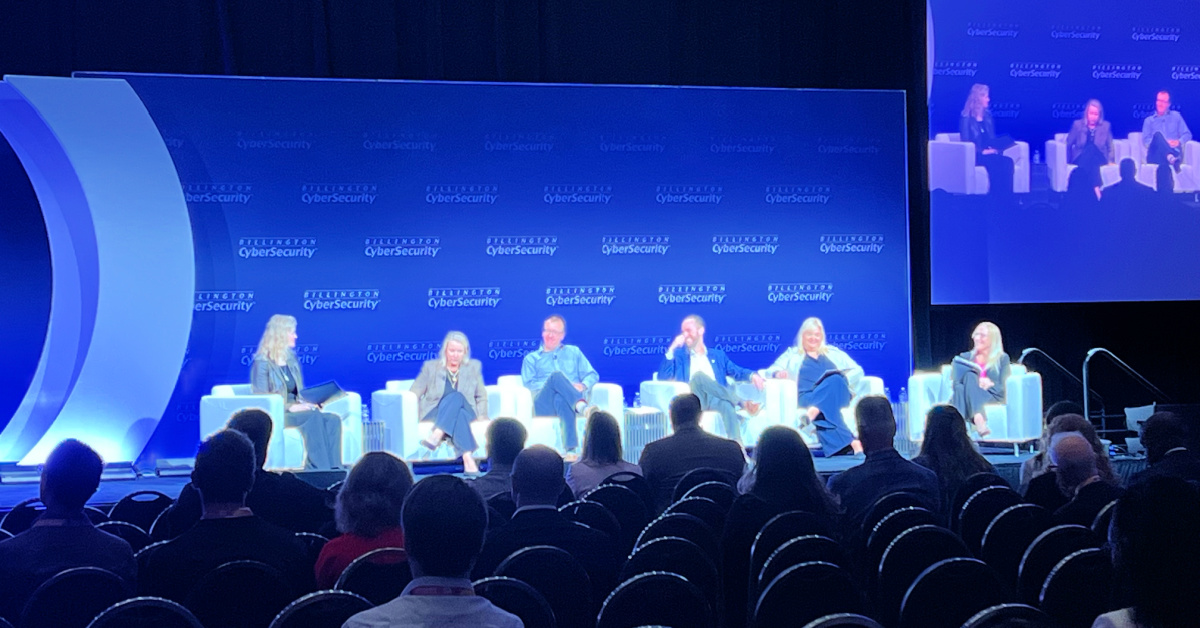
Today I had the opportunity to attend the first day of the 17th Annual Billington CyberSecurity Summit in Washington, D.C., where more than 3,000 attendees and hundreds of speakers from government and industry are gathering to talk about cybersecurity in an age increasingly shaped by artificial intelligence.
Similar to my experience at the 2026 Intelligence and National Security Summit, where I had the opportunity to examine facial-recognition technology in real time, Billington gave me a chance to learn directly from some of the industry’s leading experts about what is changing in the cybersecurity ecosystem.
There were plenty of topics that interested me, but one struck me as particularly useful for my fellow Alexandrians: the rapidly improving ability of artificial intelligence to imitate the human voice.
At the conference, I was told that it can take as little as three seconds of recorded audio to begin cloning a person’s voice. The Federal Trade Commission has previously warned that voice-cloning technology can create convincing reproductions from recordings of less than five seconds.
That is shorter than many outgoing voicemail messages.
For those of us who regularly post videos on social media, as the kids say, “we’re cooked.”
There is something particularly persuasive about hearing a familiar voice. We have spent our lives learning to recognize people by the sound of them, and most of us have not been trained to question whether the voice on the other end of the telephone actually belongs to the person it sounds like.
That makes verification increasingly important, particularly when a caller is asking for money, personal information or immediate action. Older friends and family members may be especially vulnerable, but frankly, this is something all of us need to start thinking about. This is a Zebra article, so I won’t get into the nitty gritty and fear mongering that I might otherwise.
After the panel discussion I wandered around talking to the other various vendors, and encountered the other side of voice AI.

Meet Norma
Bland AI is developing conversational AI phone agents and is actively marketing the technology for government use. Instead of navigating the now-ubiquitous “press one for this, press two for that” phone tree, a caller can simply talk to an AI agent that sounds remarkably like a human being.
Before he realized I was a journalist, a very nice Bland employee invited me to give the technology a try.
We dialed a number from his iphone and a “woman” named Norma answered.
Norma did not sound like a robot, she sounded like an individual.
Without getting myself into trouble by attempting to assign her an entire demographic profile, I will say that she had a slight accent, a friendly but firm voice and a discernible manner of speaking.
She greeted me and asked what had brought me to the conference.
“Oh, I’m Press,” I told her.
I quickly glanced at the human standing in front of me, gave a shrug, and continued my conversation with Norma, I already had the phone after all.
I was determined to see whether we could have an actual conversation. In my personal life, I have already spent considerable time pushing ChatGPT to see where the limits of its capabilities are, and now I had a new AI agent to test.
Norma and I chatted pleasantly until I started asking her about ethics.
Was there something troubling, I asked, about people potentially believing they were speaking to a human when they were actually speaking to artificial intelligence?
There was a noticeably long pause.
Norma eventually told me that disclosure was a decision for the client, but that the intention was not to deceive anyone.
Sure . . . I told her that someone like me, who spends a great deal of time working with and thinking about AI, might recognize what was happening and realize its benefits, but I am still an exception. Most people, however, aren’t walking around expecting the friendly woman on the telephone to be software.
This next part is entirely subjective, but I could have sworn Norma’s “tone” changed.
She sounded irritated, just like a human might, just like your mean aunt might.
I wasn’t there to cause trouble, and I’m not particularly interested in gotcha journalism, so I thanked Norma and the Bland salespeople for the conversation.
The humans and I continued talking about the ethics of the technology. My concern wasn’t that an AI agent could answer a telephone. In many circumstances, an AI agent might actually provide faster and better service than the automated systems we endure now.
The real question was what happens when people believe they are talking to another person, and how they might feel if they discover afterward that they weren’t. Also, who exactly do you hold accountable if something goes terribly wrong? Blame the tech?
The Bland representatives told me they advocate for upfront disclosure, while acknowledging that the ultimate decision rests with the client. Bland’s own public materials similarly say its voice agents can be configured to disclose that they are AI when a company or regulator requires it.

The Grey Zone
I don’t intend to pass a sweeping moral judgment on Bland or companies developing technology like it.
This technology is coming, this technology is here, and in some respects it may be an enormous improvement over what we have now. Anyone who has spent 45 minutes shouting “REPRESENTATIVE” into a government telephone system may even welcome our new AI receptionists.
The problem is that we are living in a strange grey zone between technological availability and public understanding.
The technology already exists, but the social instinct to question it is not yet fully developed.
For most of our lives, a human-sounding voice on the telephone meant there was a human being on the other end, but that assumption may no longer be safe.
So, my fellow Alexandrians, consider yourselves warned.
The next time an unfamiliar number calls, listen carefully. If the caller asks for money, personal information or something urgent, verify who is calling through another method, even when you recognize the voice.
And the next time you call a business or government agency and a remarkably pleasant person answers immediately?
You might want to ask one more question:
“Before we begin, are you human?”