Have You Been Flocked in Alexandria?
Inside the New Technology Helping Alexandria Police Solve Crimes

ALEXANDRIA, VA — I typed my Virginia license plate into a website this morning and hit search.
ALX ACES.
“No results found.”
That might seem like the end of the story. It wasn’t.
The website is called HaveIBeenFlocked.com. It lets motorists enter a license plate and see whether that plate appears in publicly obtained audit records showing searches made through Flock Safety, the company whose automated license plate recognition cameras Alexandria Police use.
The site says its information comes from Flock audit logs obtained through public-records requests and public transparency portals, records of searches performed through the Flock system, not a log of every plate a camera has photographed. It doesn’t save what you type in, and it acknowledges its database is incomplete.
My plate wasn’t there. That’s not the same as “no.” My car may have passed a Flock camera and been photographed; that’s different from appearing in the search records currently available to the site.
So I started wondering what these cameras actually do here in Alexandria, and how much they’ve really helped.
Volunteers have documented 74 automated license plate readers inside Alexandria. That is the 9th-largest total among the 46 Virginia cities indexed here, and 2.2% of the statewide total. At 5.0 per square mile it is more densely covered than 89% of the 2,308 US cities indexed nationally. Nearly all of them — 97% — are Flock Safety units. (Checked against OpenStreetMap August 27, 2026 · figures last changed August 9, 2026.)
AN EXTRA SET OF EYES
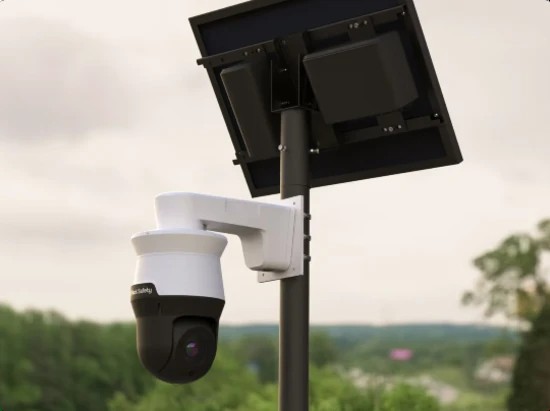
Flock cameras aren’t traffic cameras waiting to catch speeders. They capture license plates and other vehicle characteristics, along with when and where a vehicle was observed.
Additionally, Flock says the cameras are designed to identify vehicles, not people, and don’t use facial recognition.
Imagine being a patrol officer with cars streaming past in both directions, hundreds of plates a shift. No one can remember which belongs to a stolen vehicle or a wanted person. A computer can flag it instead.
If a plate tied to a stolen vehicle passes a reader, the system alerts an officer, who verifies it and decides what happens next. The cameras can also hand detectives a lead after the fact, a partial plate or a vehicle description that might otherwise go nowhere.
IT HAS ALREADY MADE A DIFFERENCE HERE
During Alexandria’s initial six-month license plate reader pilot, the city reported the technology helped close 14 cases, contributed to 33 arrests or warrants, and helped recover more than $250,000 in stolen property.
There’s a more recent example. On Dec. 11, 2025, Alexandria police were looking for Timothy Valentin, a man wanted in connection with a sexual assault investigation and entered into the National Crime Information Center as a wanted felon.
Within hours, according to APD, patrol officers got a license plate reader alert showing his vehicle traveling through Alexandria. Officers found and arrested him on the outstanding warrant.
The camera didn’t investigate the case or replace a detective. It gave police a lead that helped them find someone they were actively searching for in a city of more than 160,000 people.
This isn’t new territory for Alexandria. Years ago, living in Old Town, I remember seeing APD cruisers with plate-reader units mounted on the back. What I didn’t realize then was how much the technology, and its reach, would grow.
Alexandria officers participated in federally funded plate-reader research as far back as 2010, alongside Fairfax County police.
Today, APD’s network includes 61 Flock license plate readers and other cameras.
BUT HOW MUCH CRIME HAS IT PREVENTED?
If the cameras help police make arrests and recover stolen cars, it’s tempting to assume they’re also preventing crime. Possibly. But that’s hard to measure.
One 2021 study found police using plate readers recovered more stolen vehicles, without a measurable drop in later crime or disorder calls at the locations studied.
You can count an arrest. You can count a recovered vehicle. It’s much harder to count a crime that never happened, which is exactly the problem with proving prevention.
WHAT ABOUT PRIVACY?
I’ve never considered the plate on the back of my car private. That’s why I personalized it with ALX ACES. It’s in plain view for any officer, motorist or passerby.
The real privacy question isn’t whether someone can see a plate on a public street. It’s what happens when technology collects those sightings at scale, stores them, and can piece together where a vehicle has been over time. That’s a different question, and Virginia lawmakers addressed it directly.
A state law governing automatic license plate recognition (ALPR) use took effect July 1, 2025, with additional vendor-contract rules following this July. It limits use to criminal investigations involving reasonable suspicion, active missing-person or trafficking investigations, and specific alerts involving missing or endangered people, outstanding warrants, human trafficking, stolen vehicles or stolen plates.
System data must generally be destroyed after 21 days; audit-trail data after two years. Agencies must audit their own use at least once every 30 days and report camera counts, query activity, unauthorized use and other information to the state, with the first reports due in April 2027.
Willfully misusing the system is a Class 1 misdemeanor, punishable by up to a year in jail, a fine of up to $2,500, or both.
And a plate-reader alert alone isn’t enough to justify a traffic stop. Before stopping the vehicle, an officer must either develop independent reasonable suspicion or confirm that the plate or identifying vehicle characteristics match the information that generated the alert.
There’s a local wrinkle, too. The Alexandria Sheriff’s Office runs its own, separate Flock system, two fixed cameras at the entrance and exit of the William G. Truesdale Adult Detention Center.
The office says that data is purged after 21 days, every query needs a documented case number, and unlike APD’s broader network, no outside agency has standing access to search it. Same city, same basic technology, very different mission.
SO, HAVE I BEEN FLOCKED?
I still don’t know. I typed ALX ACES into that website looking for a yes-or-no answer and got “no results found” instead. But by the time I finished digging, my own plate wasn’t the most interesting thing I’d found.
What’s more interesting is what happens behind those cameras every day in Alexandria, quietly helping officers find people they’re looking for, recover stolen cars, and turn thin leads into real ones.
That’s a genuinely useful tool, and a real amount of power. Virginia has now put rules and accountability around how that power gets used.
For those of us driving around Alexandria, understanding how the technology actually works may matter more than whether our own plate turns up on a website.