
Folger Shakespeare Library to Open Landmark Exhibition Exploring Black Women and Shakespeare
Major new exhibition in Washington, DC, will feature nearly 100 objects spanning four centuries and highlight the enduring influence of Black women on Shakespeare's legacy.

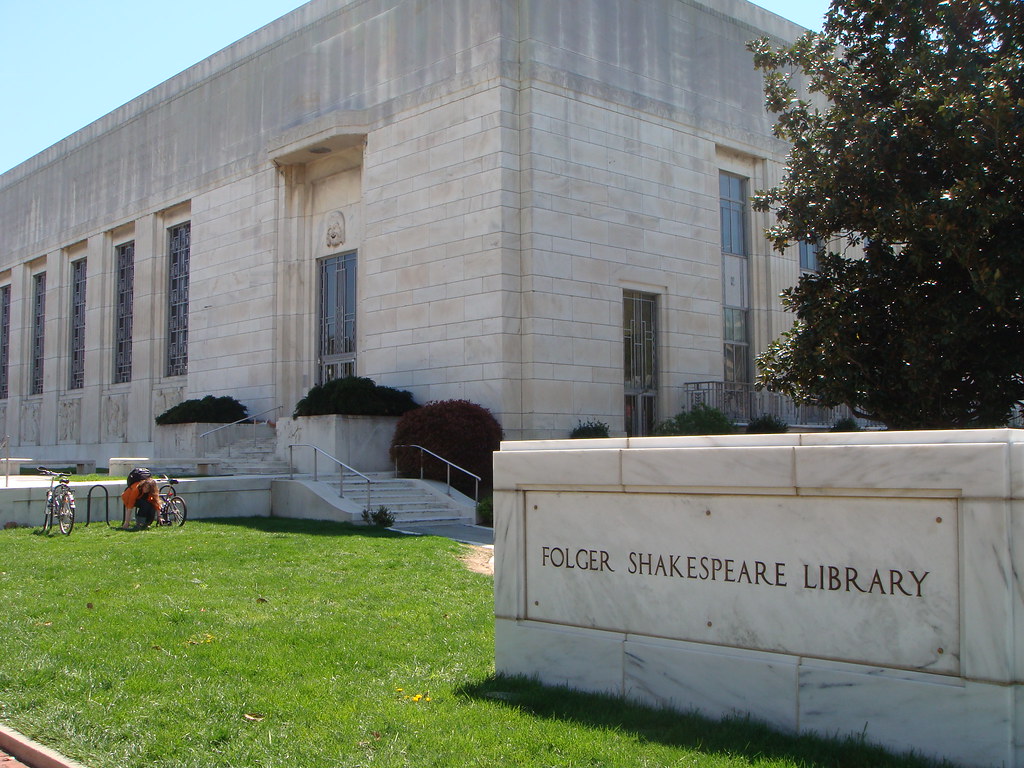
WASHINGTON, DC — Just a short trip from Alexandria, one of the nation’s most celebrated literary institutions is preparing to open a groundbreaking new exhibition exploring the connections between Black women and the works of William Shakespeare.
On October 16, 2026, the Folger Shakespeare Library will debut To Hear Her Speak: Black Women and Shakespeare, an ambitious exhibition that examines the presence of Black women in the early modern world and traces how they have engaged with Shakespeare on and off the stage for more than four centuries.
Curated by Dr. Patricia Akhimie, Director of the Folger Institute, the exhibition brings together the work of writers, scholars, actors, and artists, including Maya Angelou, Phillis Wheatley, Ida B. Wells, Toni Morrison, Lorraine Hansberry, Adjoa Andoh, Esther Rolle, and Mae Turner. It also incorporates new scholarship, including research into the ownership history of one of the Folger’s treasured First Folios.
The exhibition will occupy the Folger’s Stuart and Mimi Rose Rare Book and Manuscript Exhibition Hall and will feature nearly 100 objects, including photographs, playbills, posters, books, diaries, illustrations, and costumes. Drawn from the Folger’s extensive collections and supplemented by key loans, the exhibition tells the stories of renowned scholars, celebrated performers, and lesser-known historical figures while revealing the connections among them.
The show will be the Folger’s largest and most ambitious temporary exhibition since the institution opened its new galleries in 2024.
“We are applying a wide lens to Shakespeare’s depictions of Black women,” said Akhimie. “The exhibition will show how Black women are represented—and misrepresented—through the eyes of early modern European artists and writers. Visitors will also be able to learn from the voices of Black women in a variety of forms of expression from across the more than four centuries that the exhibition will cover.”
Named after a line from Shakespeare’s Sonnet 130, To Hear Her Speak highlights the presence of Black women in London during Shakespeare’s lifetime while also showcasing how Black women have used Shakespeare’s language, stories, and characters in their own artistic and literary work from Shakespeare’s era to the present day.
One section of the exhibition maps the presence of Black women in Shakespeare’s London, highlighting the diversity of early modern society. Another examines how the First Folio—the first collected edition of Shakespeare’s plays, published in 1623—became a status symbol during the height of the transatlantic slave trade.
A third section explores the stories of Black women who have performed Shakespeare and includes costumes designed for the Royal Shakespeare Company by Melissa Simon-Hartman, whose credits also include work for Beyoncé.
The exhibition’s final section focuses on authors, artists, and playwrights who have drawn inspiration from Shakespeare or incorporated him into their own work. Featured items include Toni Morrison’s handwritten notes on her play Desdemona and a playbill from Maya Angelou’s production of Macbeth at Wake Forest University.
Visitors will also find work by local artist Suzanne Coley, whose books of Shakespeare’s sonnets feature her own handcrafted bindings, beadwork, and embroidery.
“This exhibition will lay to rest any question of whether Black women have had a long history of engagement with and affection for Shakespeare and it does so with impressive clarity,” said Folger Shakespeare Library Director Dr. Farah Karim-Cooper. “The strength of the research is evident from Patricia’s presentation of Shakespeare’s London to the present day, and she’s compelling audiences to follow this narrative through an array of beautiful and profound works that showcase the creativity and brilliance of Black women who were in a mighty dialogue with Shakespeare.”
New Scholarship Reveals Untold Stories
An important component of the exhibition centers on the lives of enslaved women.
With the support of colleagues, Akhimie confirmed that First Folio 67 from the Folger’s collection was owned by the Fitzherbert family—a slave-owning family—from the height of the slave trade until Henry and Emily Folger purchased the volume at auction in 1924.
Displayed alongside the Folio will be a copy of a handwritten record documenting enslaved people forced to work at Turner’s Hall, one of the Fitzherbert family plantations. Also on view will be a copybook created by Phillis Wheatley, the first Black American author to publish a book of poetry, in 1773.
“The women whose lives are represented in the show have never been linked together in this way,” Akhimie said. “This approach both reveals their humanity and tells a new story about why Shakespeare and the humanities are essential to us all.”
Interactive Displays and Hands-On Experiences
Visitors can expect more than traditional gallery displays.
An interactive table will offer activities such as writing and copying inspirational texts throughout the exhibition’s run. Video installations will feature clips of Lorraine Hansberry and others discussing Shakespeare and their own creative practices, as well as performances by notable Black actors from the 1930s through the present day.
A reading area filled with books related to Shakespeare and Black women’s scholarship, creative writing, music, performance, and visual arts will serve as a miniature archive spanning centuries.
The exhibition was designed by Little Wing Lee and her firm Studio & Projects, whose portfolio includes work for the National Museum of African American History and Culture.
Visitors will also have access to an audio guide narrated by Shakespearean actress and director Adjoa Andoh MBE, the Folger’s inaugural Director’s Resident and widely recognized for her role as Lady Danbury in Netflix’s Bridgerton. The guide, available through the Folger’s Bloomberg Connects platform, will include additional commentary from Akhimie as well as scholars Kim F. Hall and Joyce Green MacDonald.
Accompanying the exhibition is a full-color catalog from ACMRS Press featuring essays by Akhimie, curatorial consultant Verónica Betancourt, Kim F. Hall, Ayanna Thompson, and other contributors. The catalog will be published on September 1.
The Folger plans to announce a full slate of public programs connected to the exhibition in early fall. A press preview is scheduled for October 14, 2026.
Plan Your Visit
To Hear Her Speak: Black Women and Shakespeare will be on view at the Folger Shakespeare Library in Washington, DC, from October 16, 2026, through May 2, 2027.
A $15 donation supports Folger programming.
For additional information, visit folger.edu/speak. A sample of exhibition object photography is available at folger.edu/speak-presskit.
Support for the exhibition is provided by Daniel W. Hamilton, the Henry Luce Foundation, Dell Technologies, and Room & Board Home Furnishings.


