Alexandria Announces Services for 2019 Labor Day Holiday Week

All Alexandria City government offices will be closed on Monday, September 2, in observance of Labor Day. The following list includes schedule information for other City facilities and partner agencies.
Resource Recovery: Residential refuse and recycling will not be collected on September 2. Collection services will be delayed by one day during the week of September 2. The Household Hazardous Waste & Electronics Recycling Center (3224 Colvin St.) will be closed on September 2.

Animal Shelter: The Vola Lawson Animal Shelter will be open weekend hours on September 2, from 11 a.m. to 5 p.m. Animal visiting hours will begin at noon.
Health Facilities: The Alexandria Health Department (4480 King St.), the Flora Krause Casey Health Center (1200 N. Howard St.), and the Teen Wellness Center at T.C. Williams High School (3329 King St.) will be closed on September 2.
Historic Alexandria: On September 2, Gadsby’s Tavern Museum and the Stabler-Leadbeater Apothecary Museum will be open from 1 to 5 p.m., and Alexandria’s History Museum at the Lyceum will be open from 10 a.m. to 5 p.m. The Alexandria Black History Museum, the Alexandria Archaeology Museum, the Fort Ward Museum and the Friendship Firehouse Museum will be closed on September 2. For more information, visit alexandriava.gov/Historic or call 703.746.4554.
Hotlines: All emergency hotlines operate 24 hours a day, 365 days a year, including the child protective services hotline at 703.746.5800; the domestic violence hotline at 703.746.4911; the emergency services for mental health or substance abuse crisis hotline at 703.746.3401; the adult protective services hotline at 703.746.5778; and the sexual assault hotline at 703.683.7273.

Libraries: All Alexandria Library branches and the Alexandria Law Library (520 King St.) will be closed August 31 through September 2.
Parking: On September 2, the Alexandria Police Department will suspend enforcement of parking restrictions at metered spaces, residential permit parking districts and other areas with posted parking time limits. This suspension of enforcement applies only to the restrictions at legal parking spaces and does not permit parking in any location normally prohibited (for example, no-parking zones, loading zones or spaces for persons with disabilities). Temporary no-parking signs will be enforced on September 2.
Impound Lot: The City’s Impound Facility (5249 Eisenhower Ave.) will be closed September 2.
Recreation and Arts Centers: On September 2, Chinquapin Park Recreation Center & Aquatics Facility will be open from 6 a.m. to 3 p.m.; Charles Houston Recreation Center and Patrick Henry Recreation Center will be open from 9 a.m. to 6 p.m.; and the Torpedo Factory Art Center will be open from 10 a.m. to 6 p.m. All other City recreation and arts centers will be closed on September 2.
Outdoor Pools: The Old Town, Memorial, and Warwick outdoor pools will be open on September 2 from 10 a.m. to 5:45 p.m.

Schools: All Alexandria City Public Schools and administrative offices will be closed on September 2.
State Offices: The following Commonwealth of Virginia offices in Alexandria will be closed on September 2: the Circuit Court, Clerk of the Circuit Court, General District Court, Juvenile and Domestic Relations District Court, and Court Service Unit located in the Alexandria Courthouse (520 King St.); and the Department of Motor Vehicles (DMV) office (2681 Mill Road).
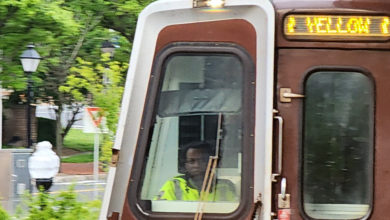
Transit: All WMATA stations south of Ronald Reagan Washington National Airport are closed through Sunday, September 8, as part of Metro’s Platform Improvement Project. Metro and DASH are providing shuttle buses every 10 to 15 minutes at all impacted rail stations. However, customers should plan for significant additional travel time in case of unexpected delays. For more information about the project and travel alternatives, visit alexandriava.gov/GOAlex. 
On Monday, September 2, regular DASH bus service will operate on a Sunday schedule. The free King Street Trolley will operate every 10 to 15 minutes, between the King Street-Old Town Metro Station and the Potomac River Waterfront, from 11 a.m. to 10:30 p.m. For more information, visit dashbus.com.